

Zero budgets vs. Free acquisition
Growing with a $0 paid marketing budget is possible, but it does not mean customer acquisition is free.
A company that does not pay for advertising replaces financial spend with other resources (which are often even more scarce and valuable):
founder time and expertise
side-product development
lots of BD work
And almost always it also comes with slower growth.
However, most founders and teams in 2026 have no alternatives: in many verticals, the unit economics simply don’t work once you apply modern benchmarks.
For retail fintech apps, a customer now costs ~$160. The global average cost per install (CPI) on iOS is ~$6. Even a simple follower from Instagram Ads will cost you ~$0.50–$1.50.
So yeah, most businesses are forced to operate with close to zero marketing spend — not because they don’t have money, but because paid traffic is too expensive.
The main principle behind sustainable zero-budget growth is simple: An existing user, piece of content, product action, or external platform should help generate the next user.
This creates a growth loop instead of requiring the company to manually acquire every customer — and that’s what we will be exploring today.
TL;DR for you
Use AI to reduce execution costs and produce higher quality things (not more of them)
Build founder persona. It’s one of the best investments in 2026.
Create content with long-term discovery value
Build distribution into the product (collaboration loops and casual contact loops)
Build a free tool around the core product
Create UGC mechanics
Replace paid acquisition with manual distribution
1. Use AI to reduce execution costs
AI makes zero-budget growth more practical because small teams can do work that previously required more headcount.
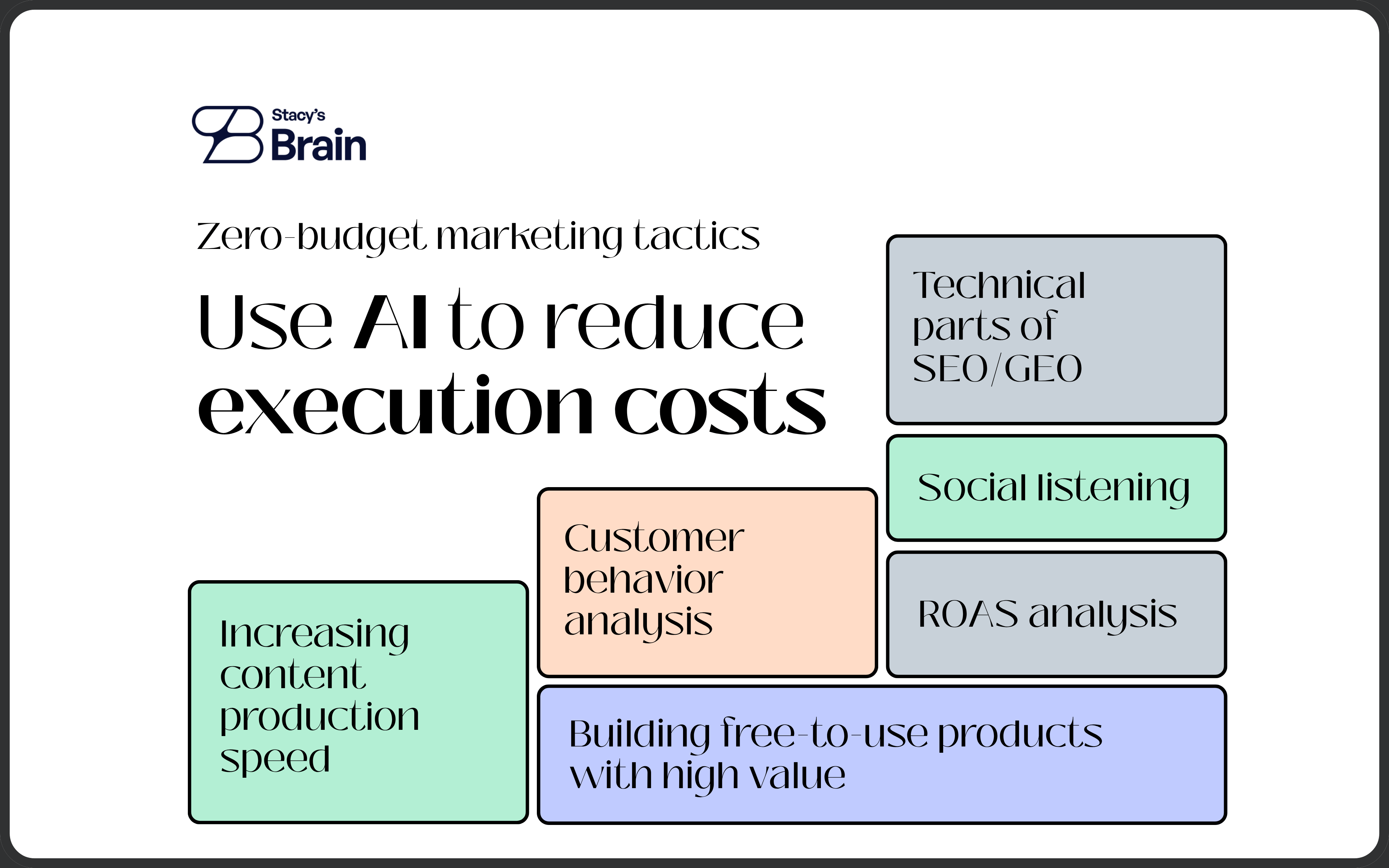
Below are a few use cases that are extremely helpful in the context of zero-budget marketing:
Building free-to-use products with high value (e.g., calculators, comparison tools, databases)
Many parts of SEO / AEO optimization can be done with AI
Increasing content production speed (note: AI should increase the quantity of creative options and ideas; never let AI write reader-facing content end-to-end)
Interpreting user behavior data and social signals
These are practical “come and grab” use cases — yet most teams limit themselves to content, which is a dead-end. Users are exhausted with AI content and want to hear humans.
So AI does not replace expertise or strategy. It reduces the cost and time required to execute and test ideas before they go live.
2. Use the founder as a distribution channel
Founder-led growth works especially well for businesses where trust and expertise influence the purchase decision:
B2B
SaaS
Consulting
Agencies
Financial products
New or technically complex products
Instead of paying for access to an audience, the founder builds direct distribution through LinkedIn, X, YouTube, newsletters, or other relevant channels.
Does it take long? Oh, yeah.
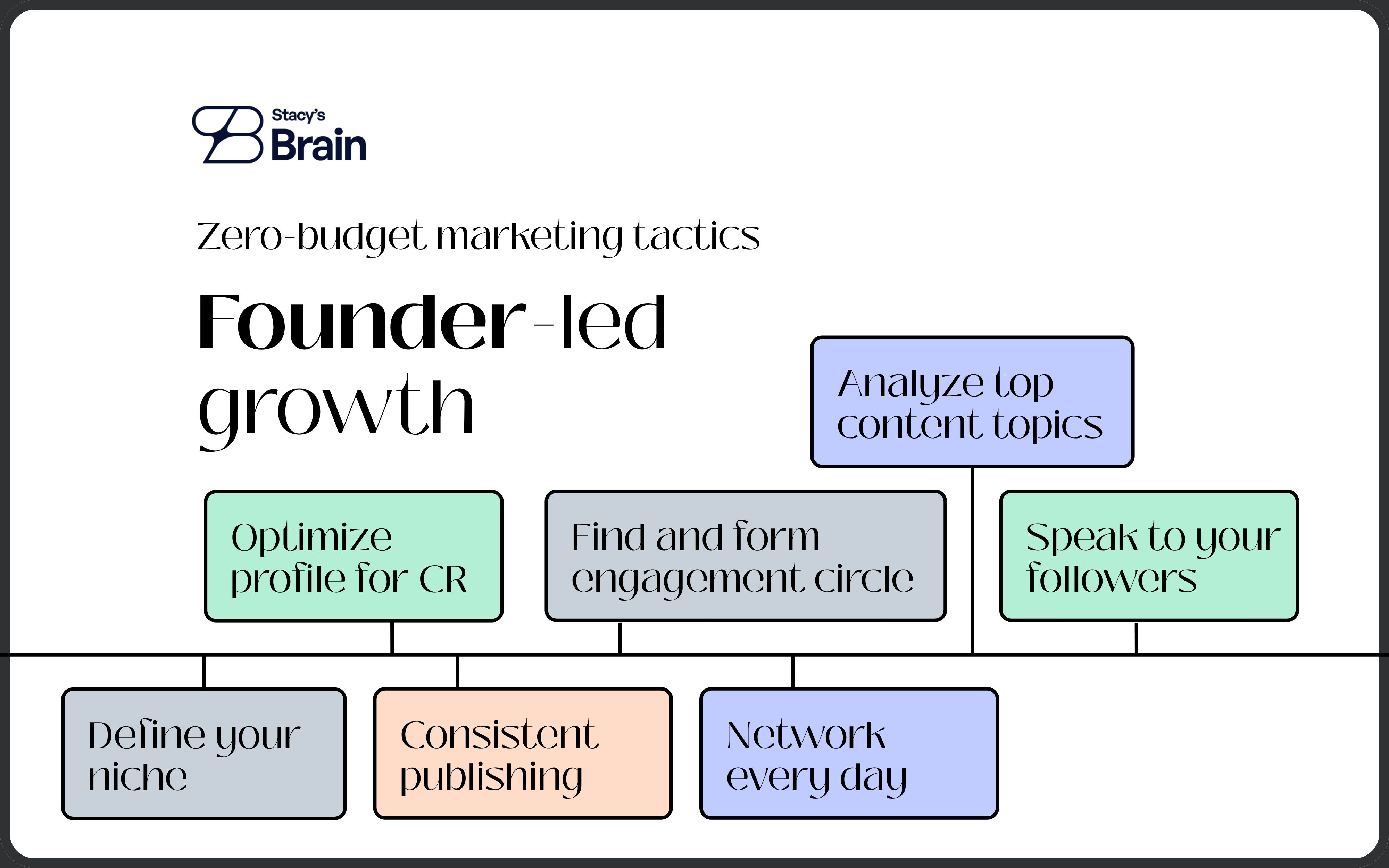
I personally reached my first 1K followers on X after 4 months back in 2023. These days it’s even more challenging (competition, AI automations, etc.), so I’d say it takes 5–6 months of consistent execution to build a founder persona that actively converts attention into revenue or pipeline.
And it’s not just about content and consistent posting. Other pillars — active networking, collaborations, and iterative feedback — are equally important.
Example: Marc Lou
Pieter Levels grew products such as TrustMRR and DataFast largely through his own audience.


Yeah, he’s not a newcomer. In fact, he was one of the early “founders” of the build-in-public movement, which is mainstream these days. Reaching his scale and impact takes years—not months. He’s a huge example of how powerful a strong founder brand can be.
3. Create content with long-term discovery value
In this section, I want to start with an example.
If you search for “Benchmarks for user acquisition in 2026 by industry,” you’ll end up on the same page everyone (even giants like HubSpot) is quoting. It’s a page from an SEO agency that published its benchmark lists in 2024 (so they’re not even from 2026). That page got cited, and they’ve just kept updating the year on it.
It has no methodology, no sample, and no data source.
Simply put, there could be any random number in those tables—and people would still quote them and benchmark themselves against those numbers.
Anecdote, right?
In fact, almost every LLM and related article will trace back...
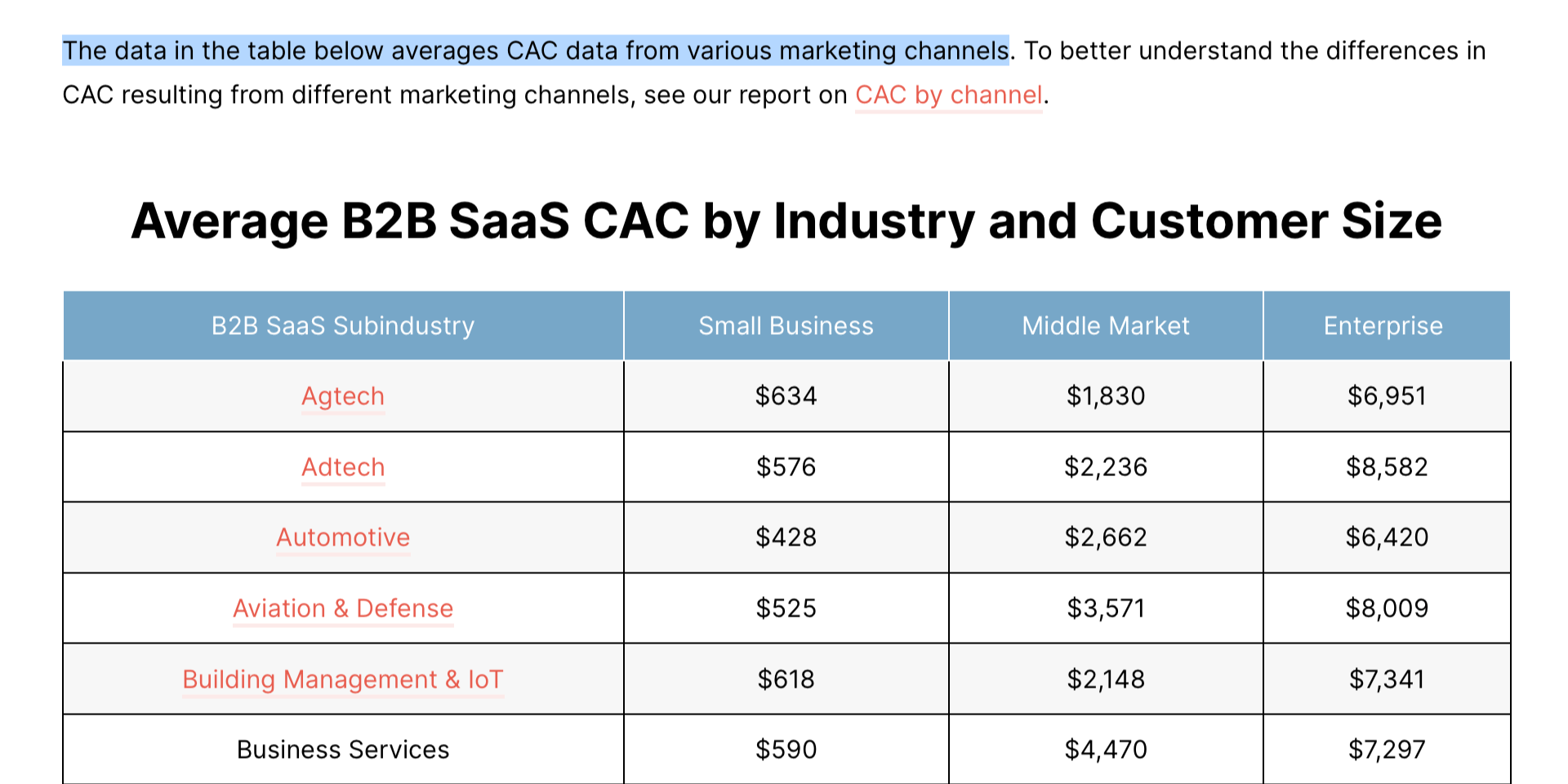
This is a perfect example of why evergreen content is extremely efficient.
The marketing objective here is to create content around questions the target customer is likely to continue asking over time.
Examples:
case studies
original research reports
practitioner notes
tutorials
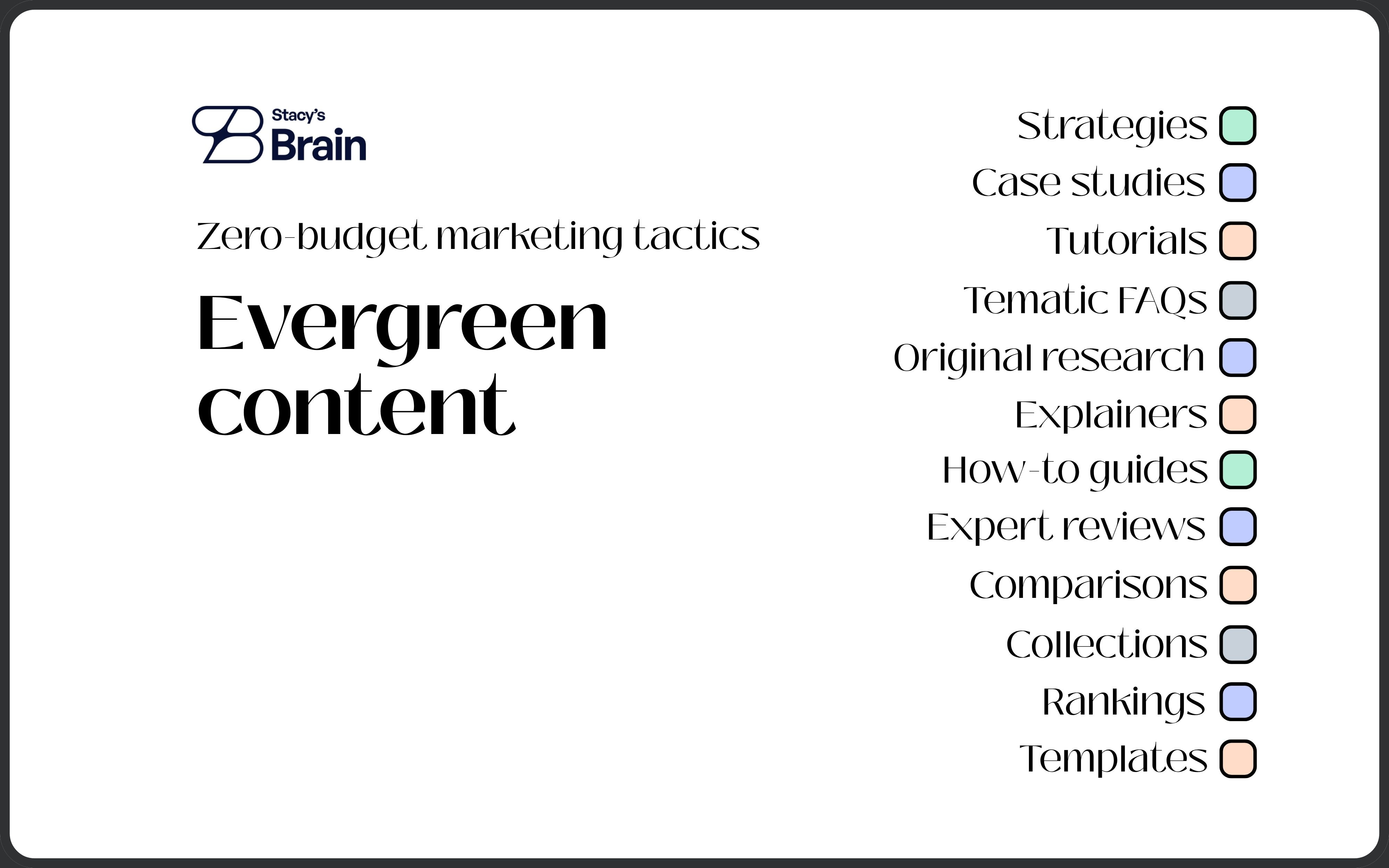
This creates a different type of return from short-lived engagement content, and it is a must-add for your SMM and founder growth strategy.
PS: Don’t forget to optimize for LLM search visibility though!
PPS: Ahrefs and similar tools will help you choose the right topics.
AI assistants create an additional discovery layer.
Original datasets, tables, research, benchmarks, and expert analysis can potentially be referenced by AI systems when users research a category.
The implication for content strategy is that useful, specific, sourceable information has more long-term value than generic commentary.
4. Build distribution into the product
The strongest zero-budget mechanism is product-led distribution.
This happens when normal product usage exposes another potential user to the product.
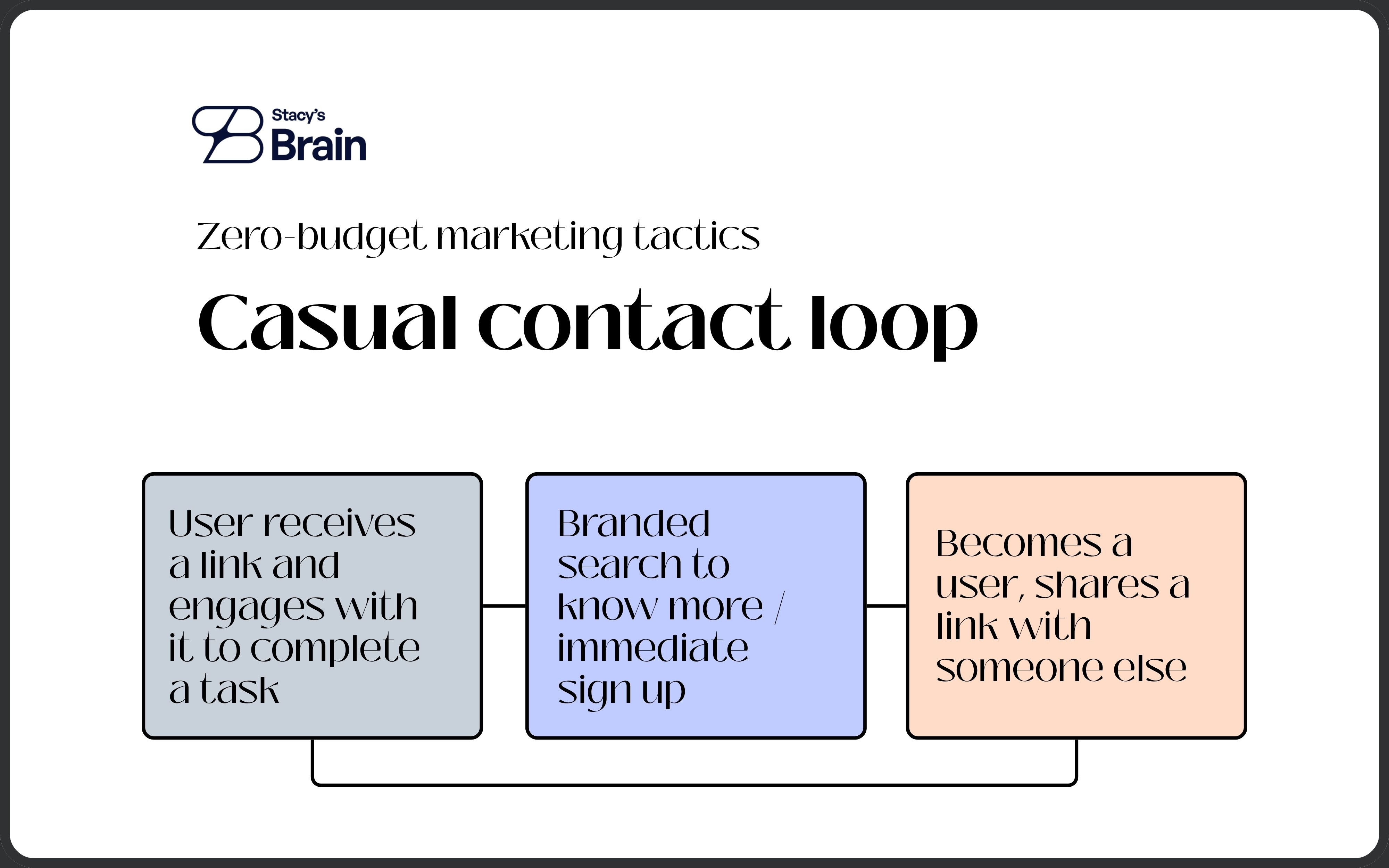
Examples include:
a Typeform link
a Calendly booking page
a Figma file
a Loom recording
a shared Notion document
Here, the user is not actively promoting the product and distribution happens because sharing is part of completing the task.
This is often described as a casual contact loop.
Example: FlowMapp
FlowMapp grew to more than 180K users across 150 countries while operating with essentially no paid marketing budget.
The product naturally supports external sharing: A designer creates a sitemap or prototype and sends it to a client or teammate. The recipient is then exposed to the product and can enter its freemium funnel.
The acquisition mechanism is therefore built into the workflow.
Collaborative loops
I mention collaborative loops in the same context as they are a stronger version of product-led distribution.
The product becomes more useful when additional people join to collaborate.
Examples: Figma, Notion, Miro, all types of task trackers.
The causal mechanism is:
One person starts using the product.
They need another person to participate.
They invite that person.
The second person becomes a user.
The product becomes more valuable to both.
Perfect for team-based B2B products.
5. Build a free tool around the core product
If the main product is difficult to discover or explain, a company can create a smaller free product around the same customer problem.
You definitely saw these examples:
Templates
ROI calculators
Paper trading tools
Free databases and diagnostic tools
This is usually called side-project marketing.
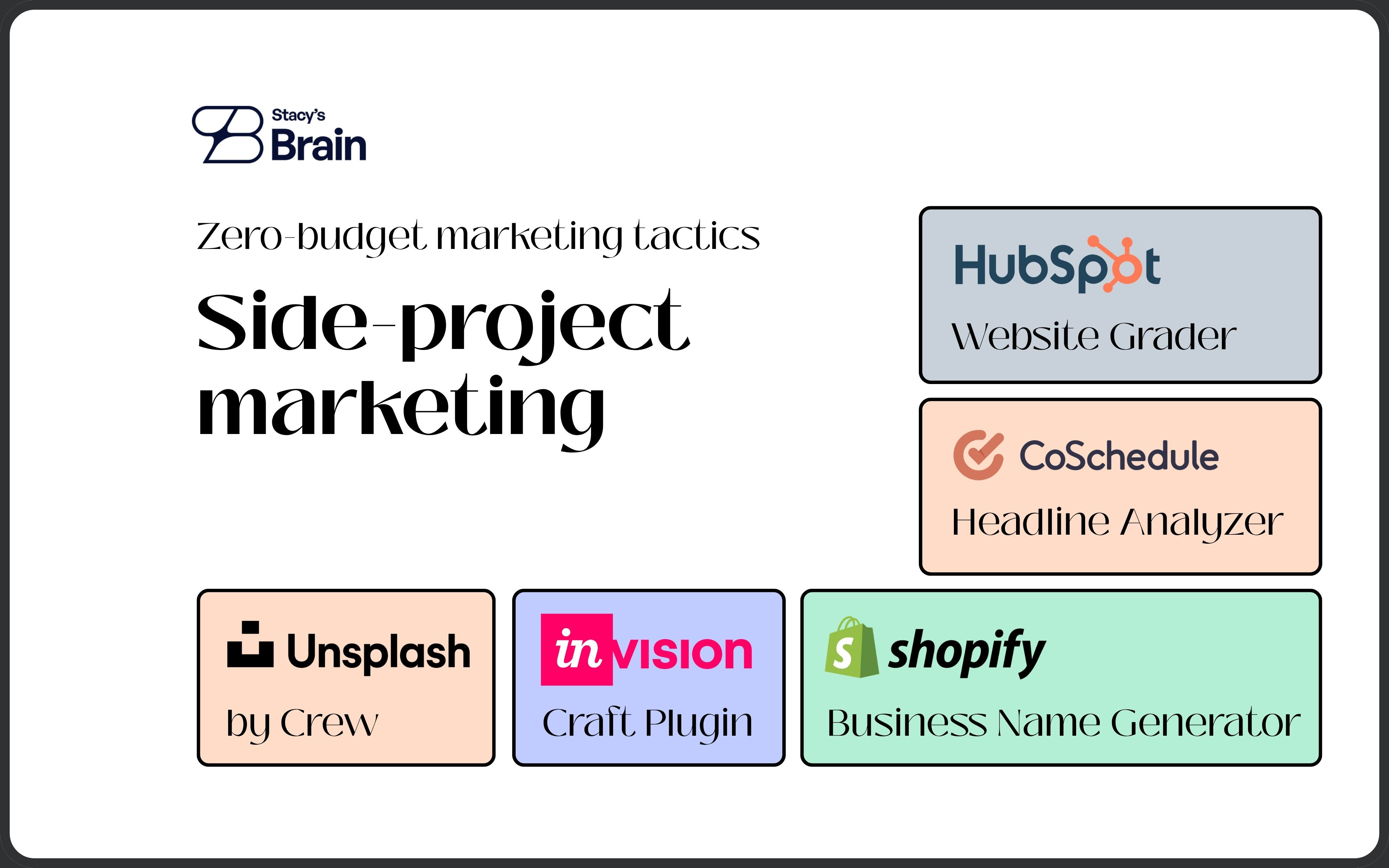
The mechanism is:
The free tool solves a narrow, immediate problem.
Users discover it through search, communities, or sharing.
Some users also discover the company’s main product.
This is particularly useful for complex products where demand for the category itself may be limited.
6. Create user-generated distribution
UGC becomes a growth mechanism when the product gives users something they naturally want to share.
Let’s consider Spotify Wrapped as an example.
They create personalized data about the user’s listening behavior. Users share it because the output communicates something about their identity.
Duolingo applies a similar principle through streaks, usage statistics, and progress.
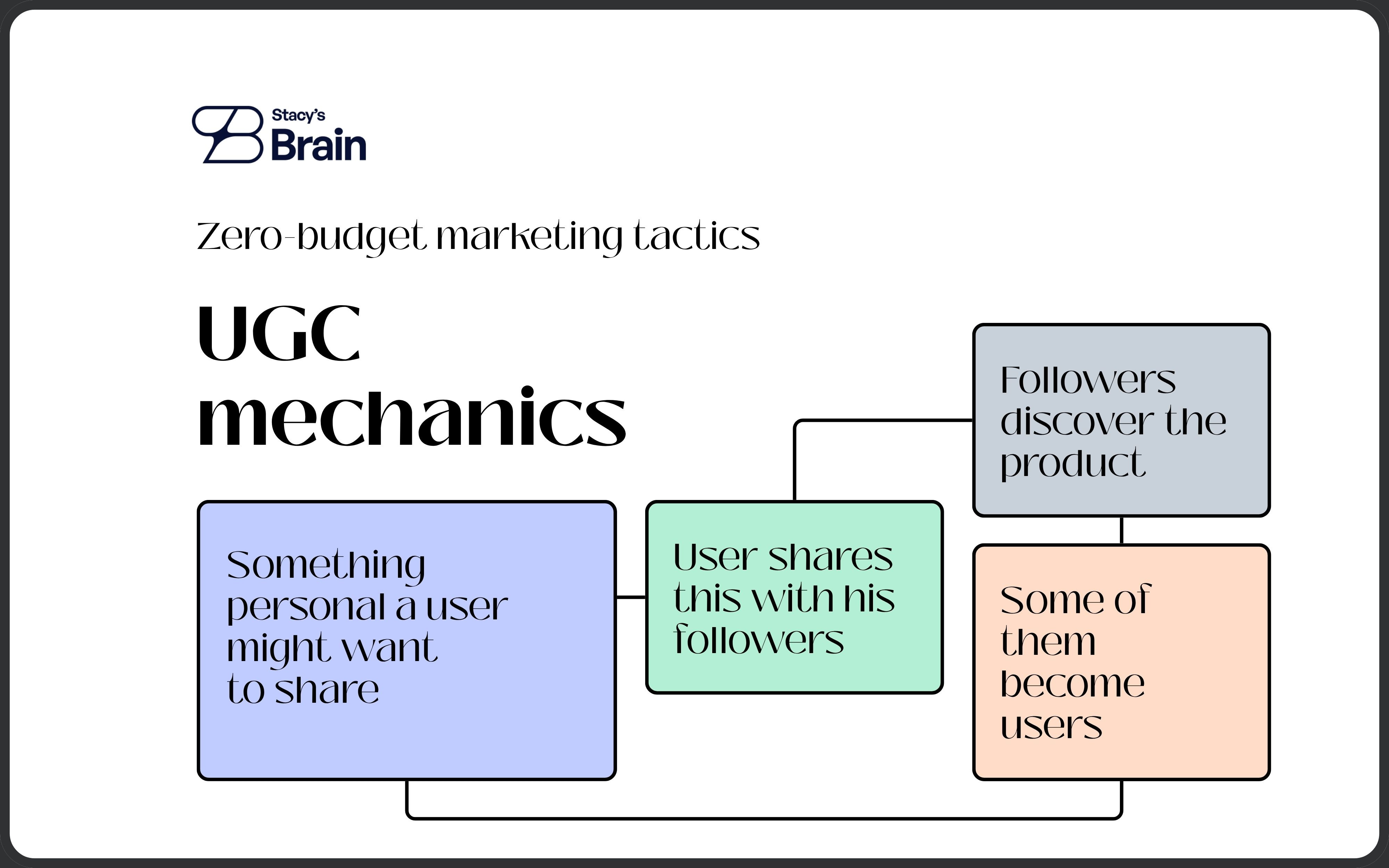
The mechanism is:
The product creates a personalized or socially valuable output.
The user shares it.
Other users see the product.
Some of them become users themselves.
Successful sharing mechanics normally provide value to the user, not only to the company.
Typical motivations include social identity, status, achievement, expertise, etc. — meaning something a user would like to show off.
7. Replace paid acquisition with manual distribution
There’s a fresh study that tracked six months of unpaid social media growth for Birla Open Minds International School.
Their strategy included zero-cost marketing:
hyper-local community engagement
educational events
student-generated content
As a result, their Facebook page generated more than 122,000 views without paid promotion.
What they did? Nothing extraordinary; they just replaced paid acquisition with human effort and local distribution.
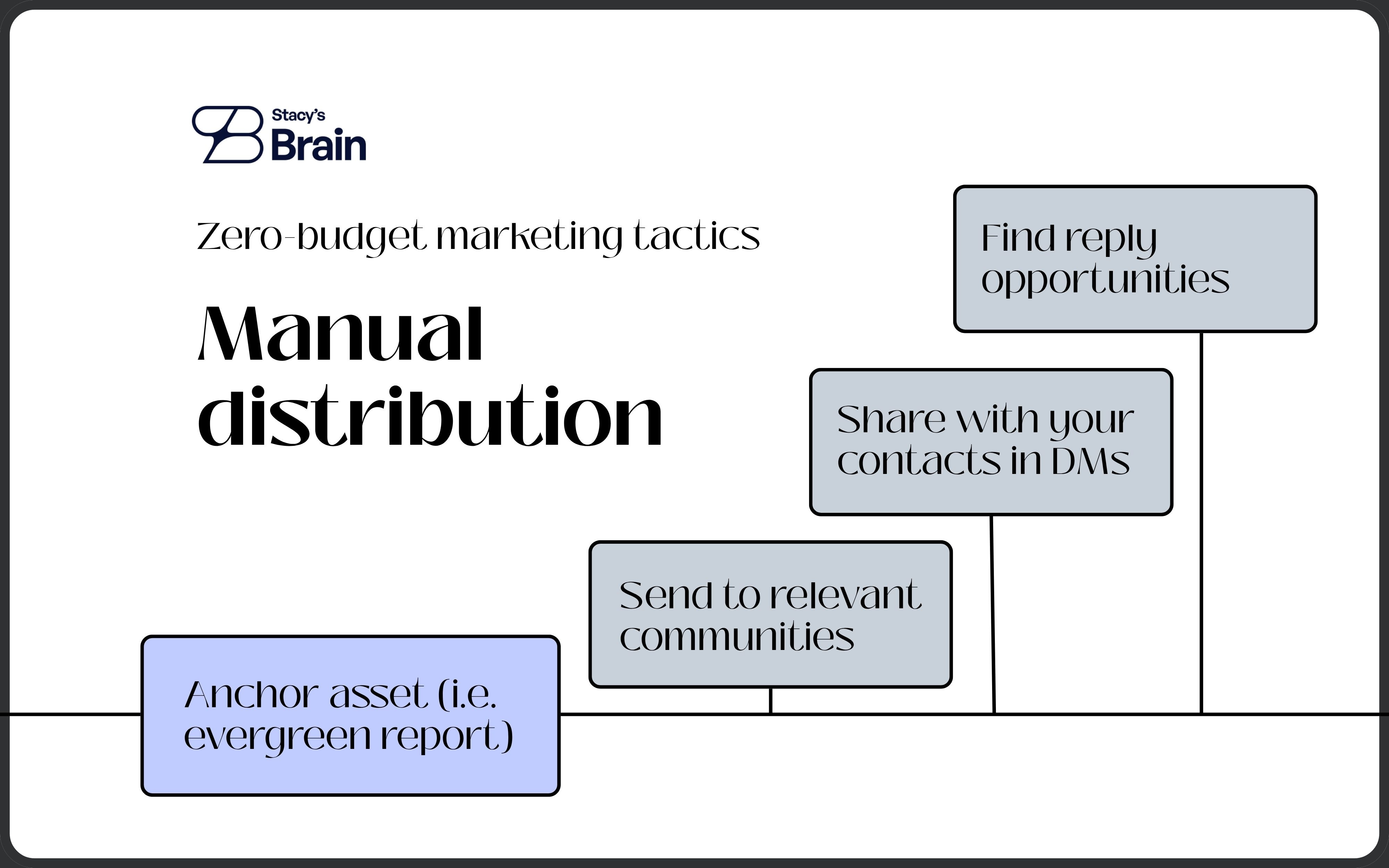
There are types of businesses cannot build product loops immediately. This is common for local businesses, professional services, early-stage startups — a classic cold start problem.
In these cases, the founder or team can replace advertising spend with manual distribution:
participating in interviews and AMAs
direct outreach
inviting people for customer interviews (yeah, 90% will ignore you but there are still 10% who will reply)
active participation in relevant communities as a talking head
collaborations with other local or niche brands
For local and niche businesses, cross-promotion can also replace part of paid acquisition.
Examples:
joint events
newsletter swaps
shared educational sessions
product bundles
creator or community partnerships
The mechanism is audience overlap.
Two businesses serving similar customers but selling different products can expose each other to existing audiences without paying for media. This is most effective when the audiences are relevant but the businesses are not direct competitors.
Zero-budget journey is tough
Here are a few things to help you stay focused and direct your limited resources in the right way during your journey:
Focus on one or two acquisition channels
Zero-budget companies have a limited amount of founder and team time.
Trying to maintain five social platforms at once usually creates shallow execution across all of them. A more efficient model is one primary discovery channel + one owned or semi-owned retention channel.
For example: LinkedIn + Substack / YouTube + Discord / X + Telegram.
The goal is to build enough density in one channel for distribution to compound before adding more.
Measure product response, not only traffic
Zero-budget growth can create an illusion of progress because activity is easy to measure.
Posts published, impressions, followers, and website visits do not confirm that the product has demand, and many founders get trapped spending years on dead ideas.
So here are some important metrics you still have to track:
Activation
If users register but do not complete the key action, acquisition is not your main problem.Retention
Do users return? For a zero-budget model, weak retention is particularly damaging because every new user requires time or organic distribution to acquire.Organic acquisition
Are new users arriving without direct intervention from the founder? This shows whether the distribution mechanism is beginning to work independently.
Referral behavior
This can be measured through referral rate, invitations, shared links, collaborative usage, or viral coefficient.
Inbound demand
Does content generate inbound leads, demo requests, partnerships, customer conversations, etc. This is more useful than measuring engagement alone.
Validate manually before waiting for organic growth
The main risk of zero-budget marketing is slow feedback.
Paid acquisition can generate market feedback quickly — but organic growth takes longer, which makes it easier to spend months on a product with weak demand.
The first stage should therefore rely on manual validation.
During the first weeks, founders can (and should) use direct outreach, customer interviews, manual onboarding and direct product demos to understand if there’s a fit.
Only after this signal exists does it make sense to invest heavily in content, SEO, product loops, or marketplace distribution.
Expect slower growth — it’s fine
Paid marketing primarily buys speed. It allows a company to generate traffic and test acquisition at scale immediately.
Without paid distribution, growth depends on mechanisms that take longer to compound like search rankings, founder audience, referrals.
This means zero-budget growth normally requires more time before acquisition becomes predictable.
The trade-off is less financial risk, but slower feedback and slower scale.
A practical $0 growth framework
So now let us simplify the sequence to five stages.
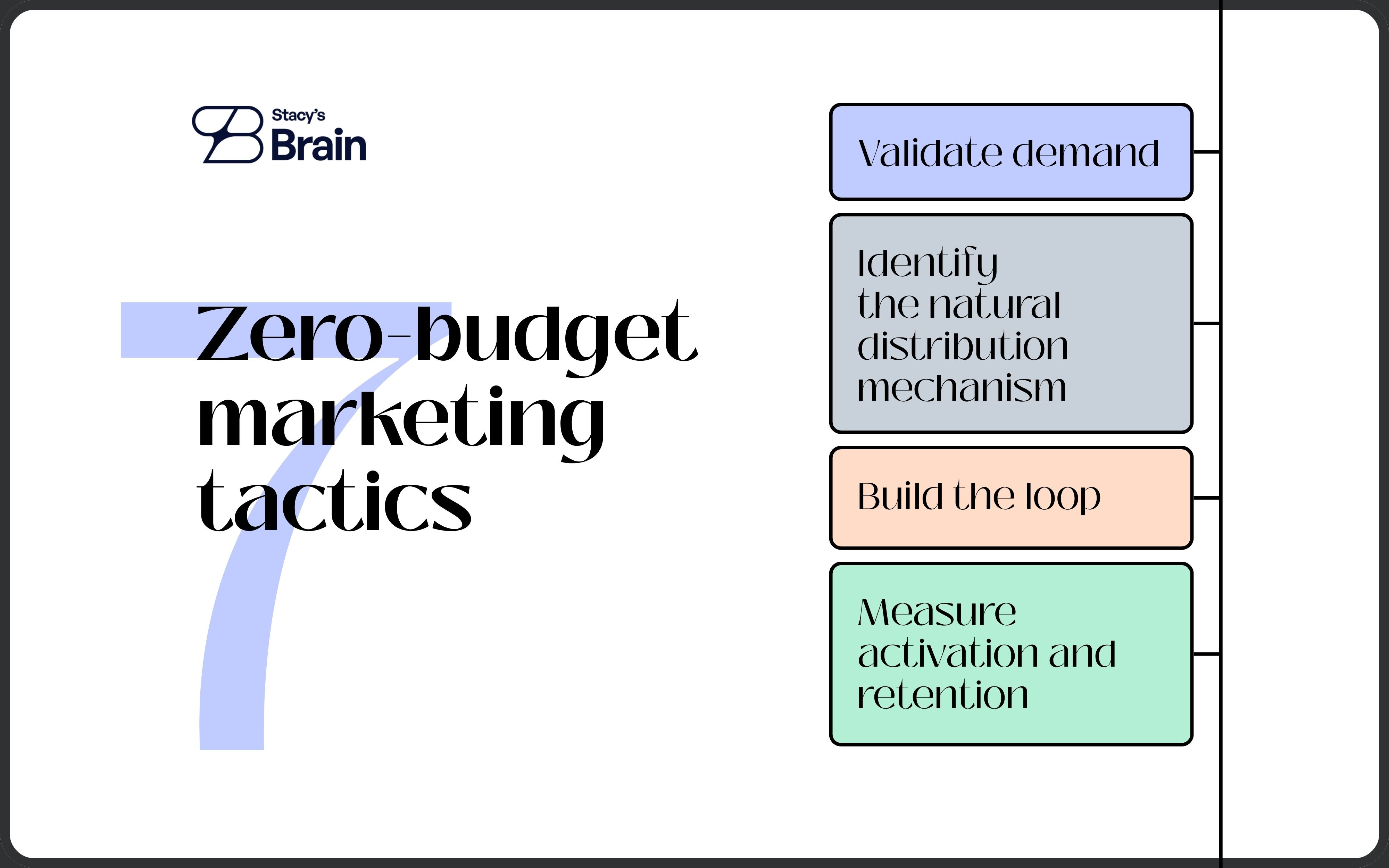
Stage 1: Validate manually
Confirm that real users understand the problem and want the product.
Stage 2: Identify the natural distribution mechanism
Determine whether growth can come from:
— product sharing mechanics
— founder content
— search
— UGC
— free tools you develop
— partnerships
Stage 3: Build the loop
Connect usage or content to the acquisition of the next user.
Stage 4: Measure activation and retention
Confirm that acquired users actually receive value and return.
Stage 5: Add paid marketing only after the organic mechanism works
Paid acquisition can then increase the speed of a system that already converts and retains users.
So yeah — $0 marketing is not a set of free promotional tactics. It is the design of acquisition mechanisms that use product behavior, founder expertise, content, communities, and existing platforms instead of paid media.
Always the best
ah, yes, you can also mix low-budget strategies with big budget approaches for maximum efficiency. yes, rules do change a little, but main principles stay the same: build roads where people walk, put a ramen stall there and watch them numbers pop.