

Introlude (before we start)
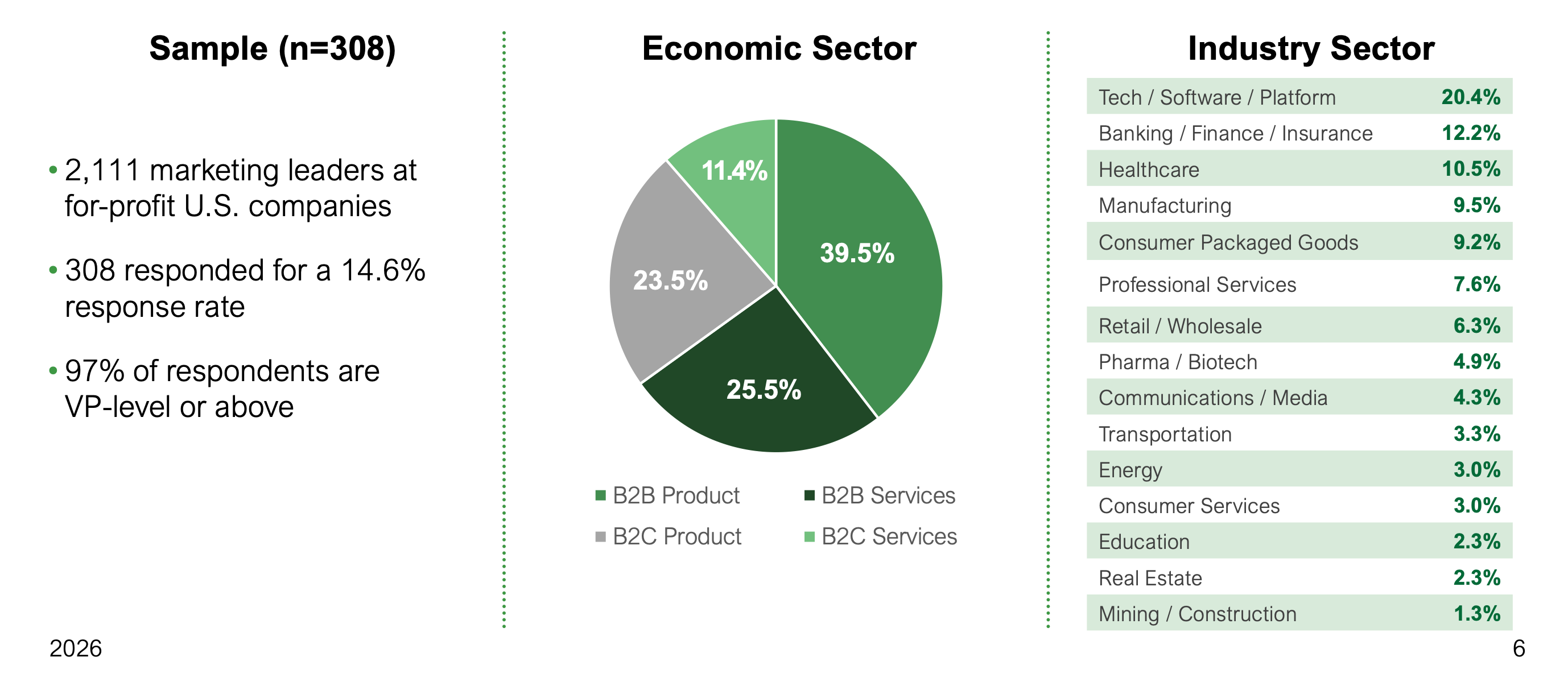
The CMO Survey, 2026 Topline Report is an online survey of 308 marketing leaders at US for-profit companies, fielded in January 2026. 97% of respondents were VP level or above.
One margin note you need before the numbers:
Everything below is self-reported. That means that when a CMO says AI improved sales productivity by 14%, they believe it; it’s not a fact.
Meet the beast
We start here, because it frames who we are comparing ourselves against.
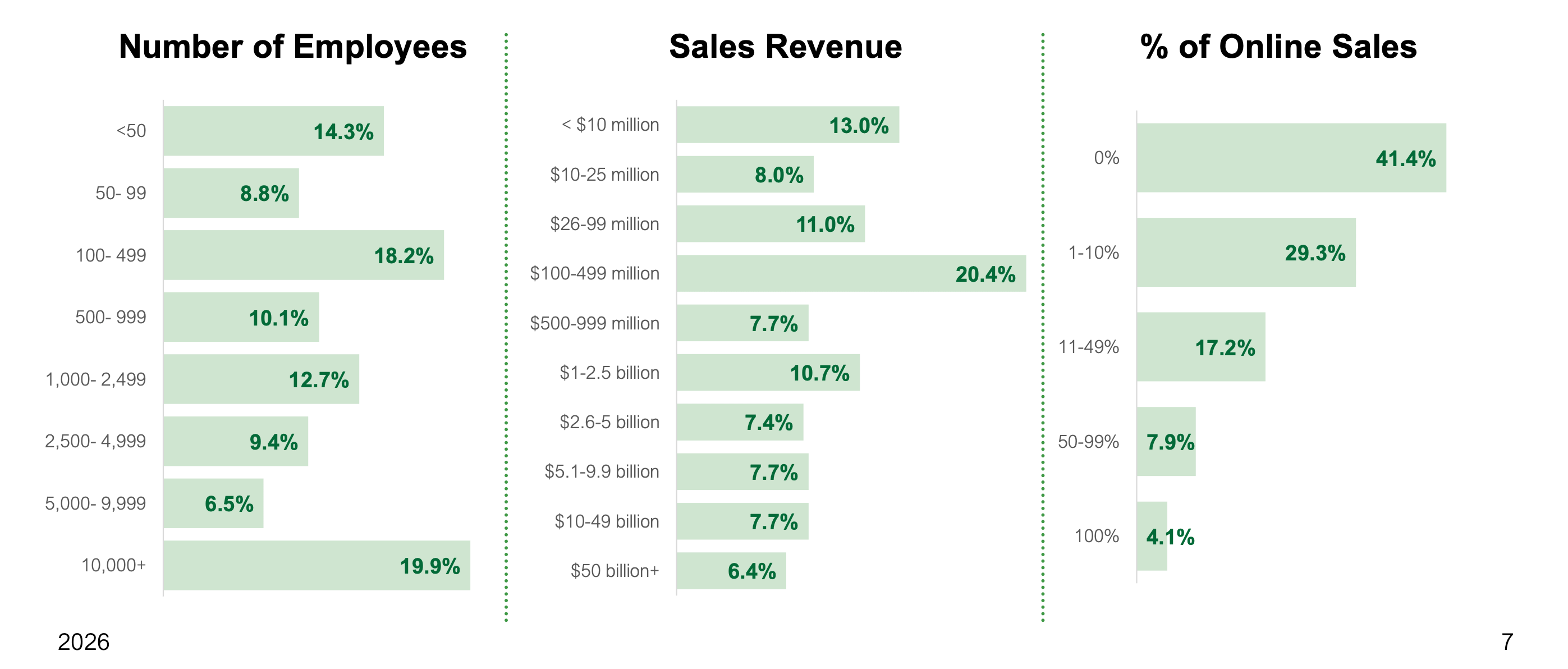
97% of respondents we will be benchmarking against are VP or above, at established US firms, and 41.4% of them report that none of their sales happen online.
So when you read “you’re ahead of the average US company,” the honest version is: ahead of a large, established, largely offline American business. That’s still a useful mirror — a lot of the market you sell into looks exactly like this — and if your frontier is B2B, there’s no better lens to understand your customer. If not — well, you’ll at least understand how you’re different from established businesses!
Fact sheet: The “average US company”
The “average US company” is big and mostly offline.
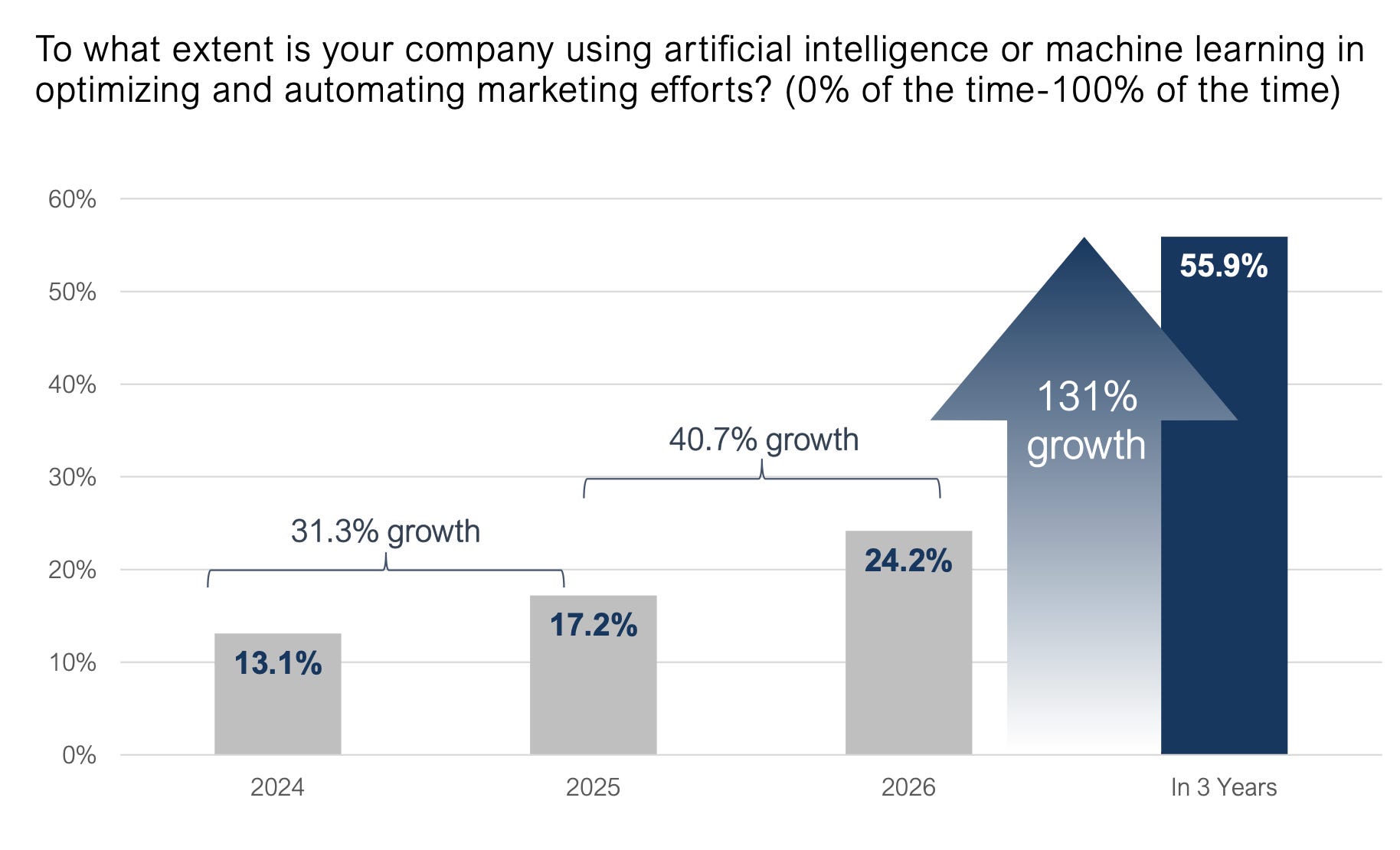
They expect AI to do 56% of marketing work in three years. It does 24% today.
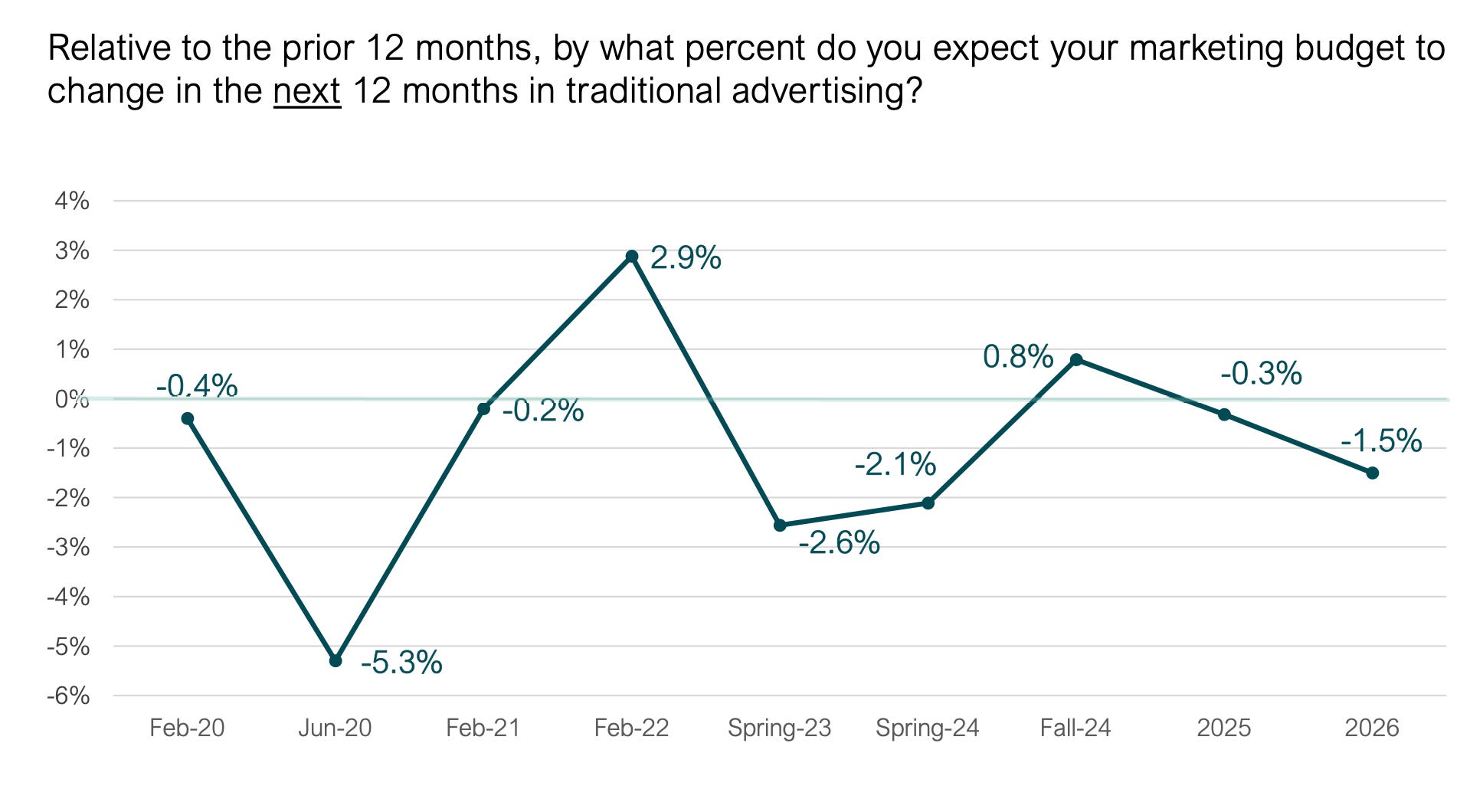
Traditional advertising is the only line they’re cutting — expected change of −1.5% against +10.4% for digital.
Their top three blockers are budget, system integration, and bandwidth — 20.1%, 19.1% and 14.1%.
When profits are down, 53.1% cut costs and only 26.8% push for revenue.
They are planning for a VERY long distance: 53.9% believe marketing’s influence on a customer lasts a year or more.
You vs. Beast: Where you’re genuinely ahead
These are the gaps that don’t depend on company size.
AI adoption. They use AI or machine learning for 24.17% of marketing optimization and automation today, and expect 55.91% within three years. Generative AI specifically sits at 22.42%.
If you’re a solo operator or a one-person marketing team with a prompt library you passed their three-year target some time ago. So yeah — you’re well ahead of the market.
Channel mix. Expected budget change for the next twelve months: digital +10.4%, overall marketing +7.61%, brand building +5.87%, and traditional advertising −1.5%. Traditional advertising is the only negative line in the entire list.
If you’re running a startup, you can make decisions fast. You can change your entire marketing strategy overnight — and launch a new set of creatives tomorrow. Huge advantage.
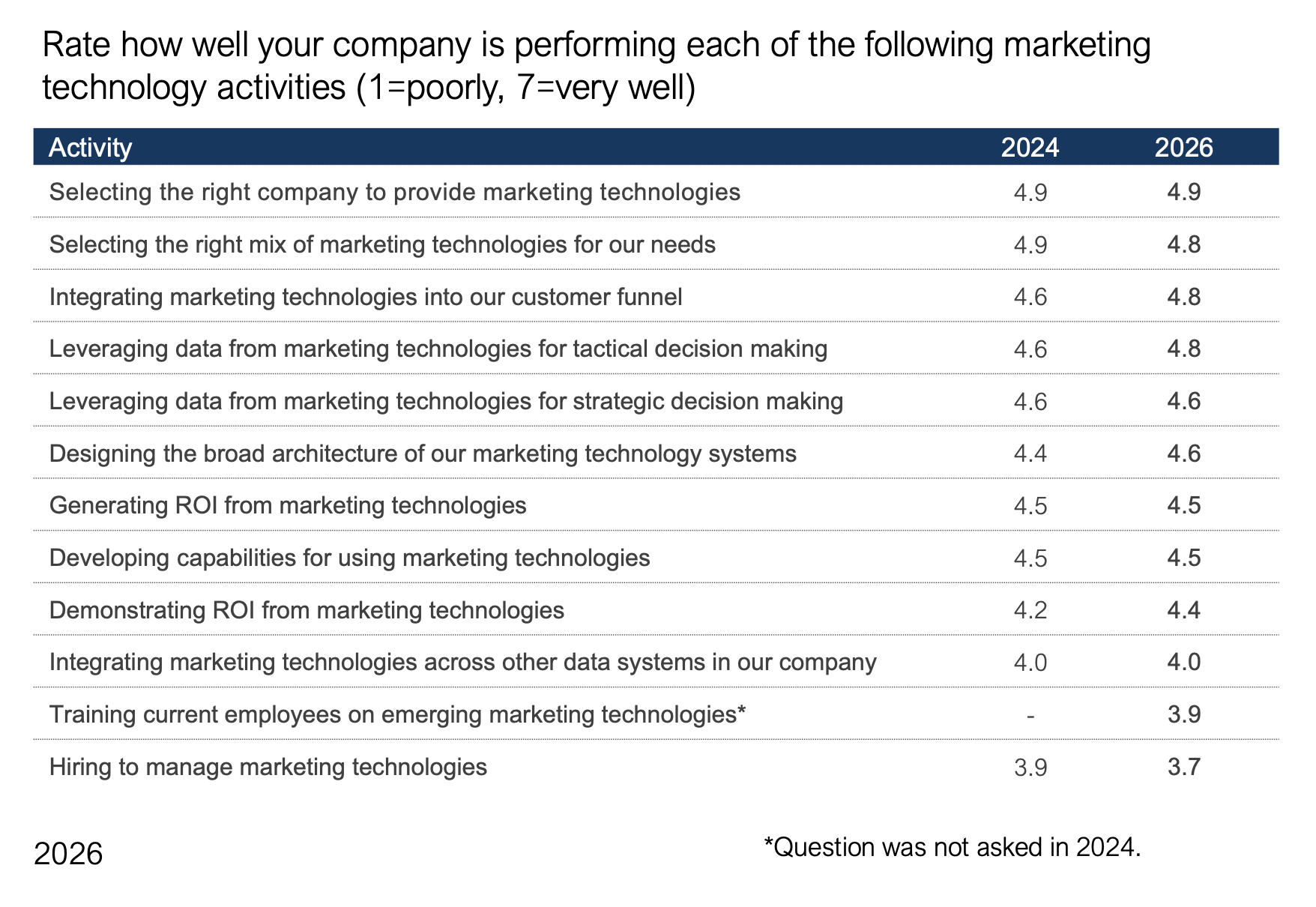
Blockers. Asked what stops them getting value from marketing technology, they named lack of budget (20.1%), technology integration and data architecture (19.1%), and bandwidth, time and focus (14.1%).
The middle one — years of accumulated systems that don’t talk to each other — is a problem you do not have. Treat it as an advantage.
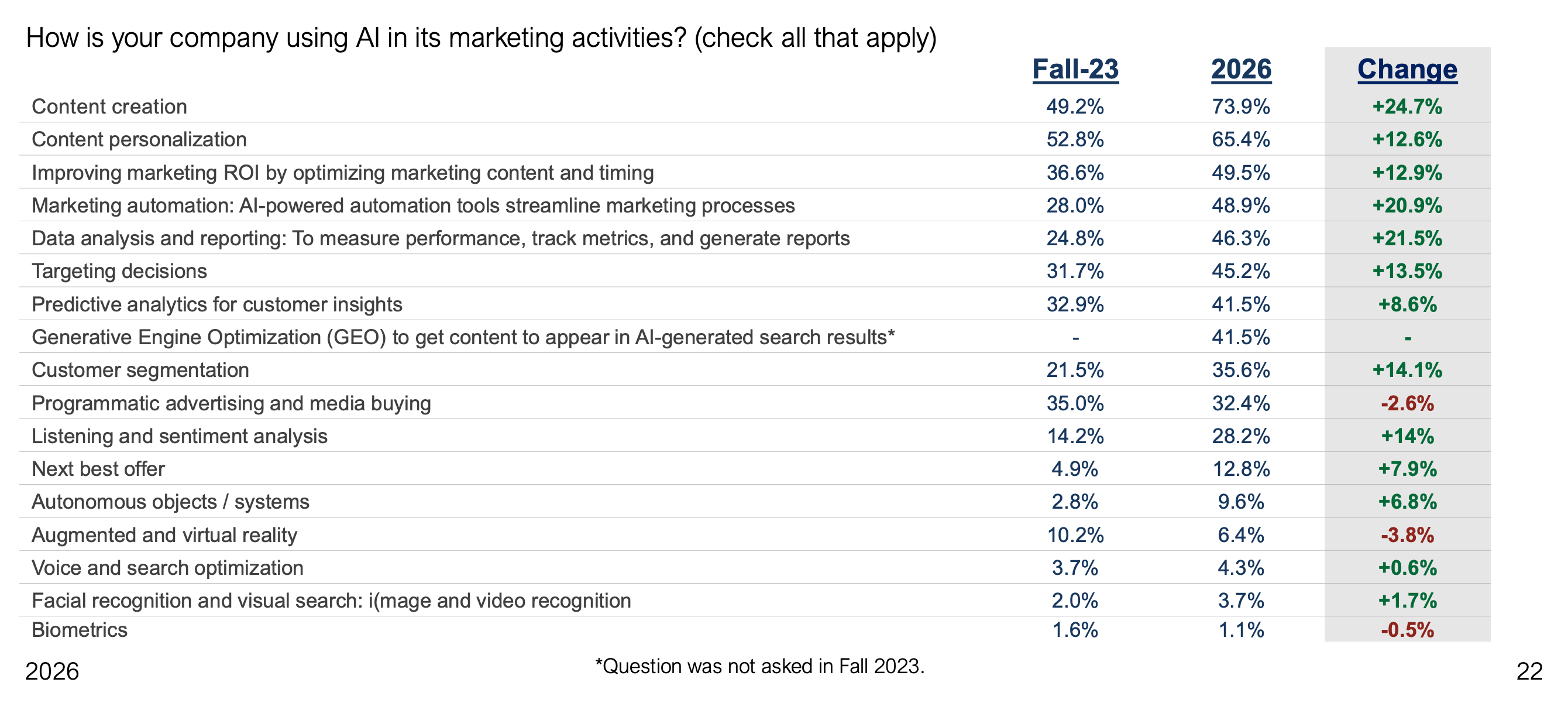
What AI actually gets used for. Content creation 73.9%, content personalization 65.4%, and improving ROI by optimizing content and timing 49.5%. Nothing exotic.
If your AI use is more sophisticated than “write the thing, then rewrite it per segment,” you’re past the median.
Default response to a bad quarter. When year-to-date profits come in under plan, executives prioritize cutting expenses 53.1% of the time and growing revenues 26.8%. Two to one, toward defense.
Startups don’t think in long timelines; they operate in short sprints, ready to endure several bad quarters in a row — because each bad quarter provides more data to finally make it. If the budget allows, of course.
Where the comparison breaks
We have to be honest in this part — everything below will look like a win in the numbers, but it isn’t. Still, it’s important to understand the market, right?
Marketing spend share
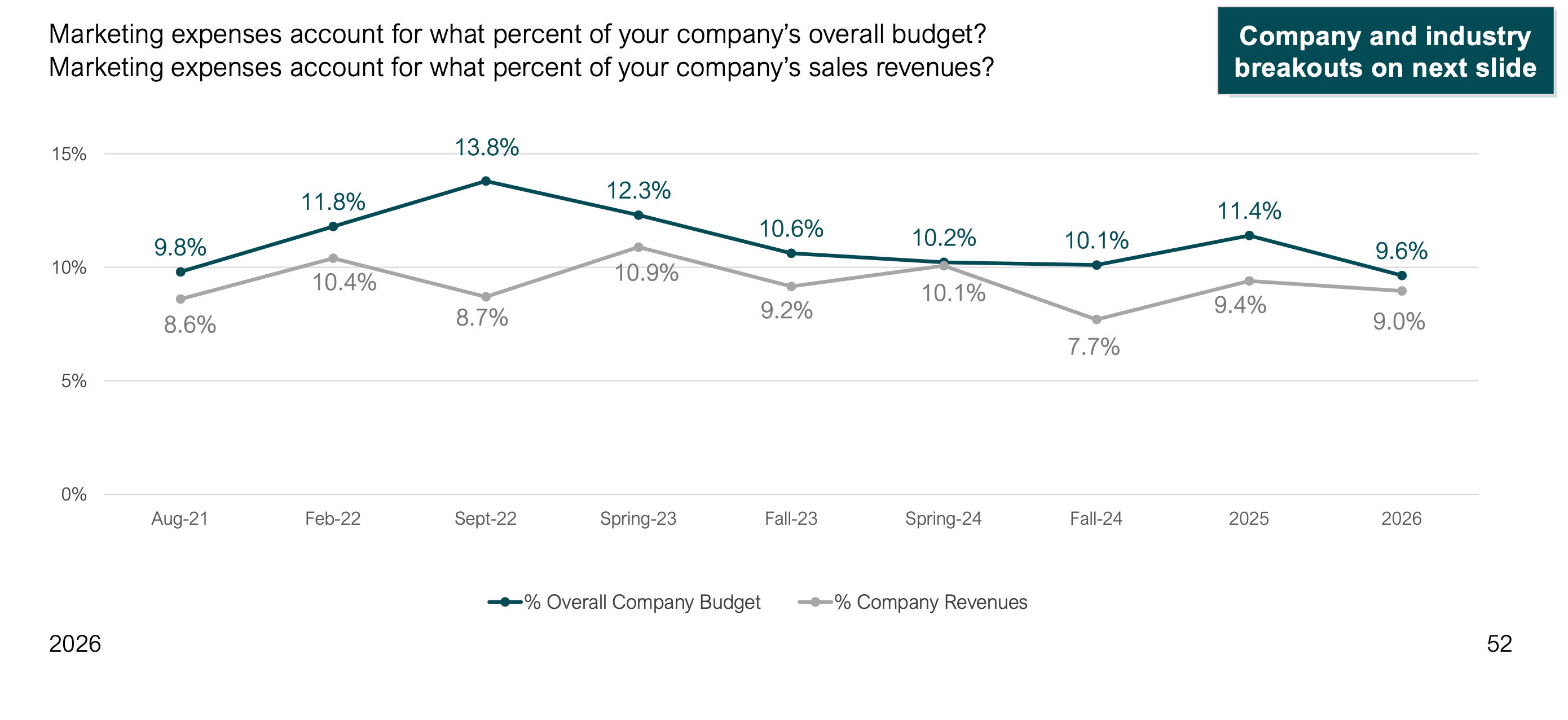
Marketing is 9.64% of total budget and 8.96% of revenue at these companies. At a business with hundreds of millions in revenue, that percentage funds a department, an agency roster, and a media plan. Your 30% of a much smaller number is not a win over their 9.6%.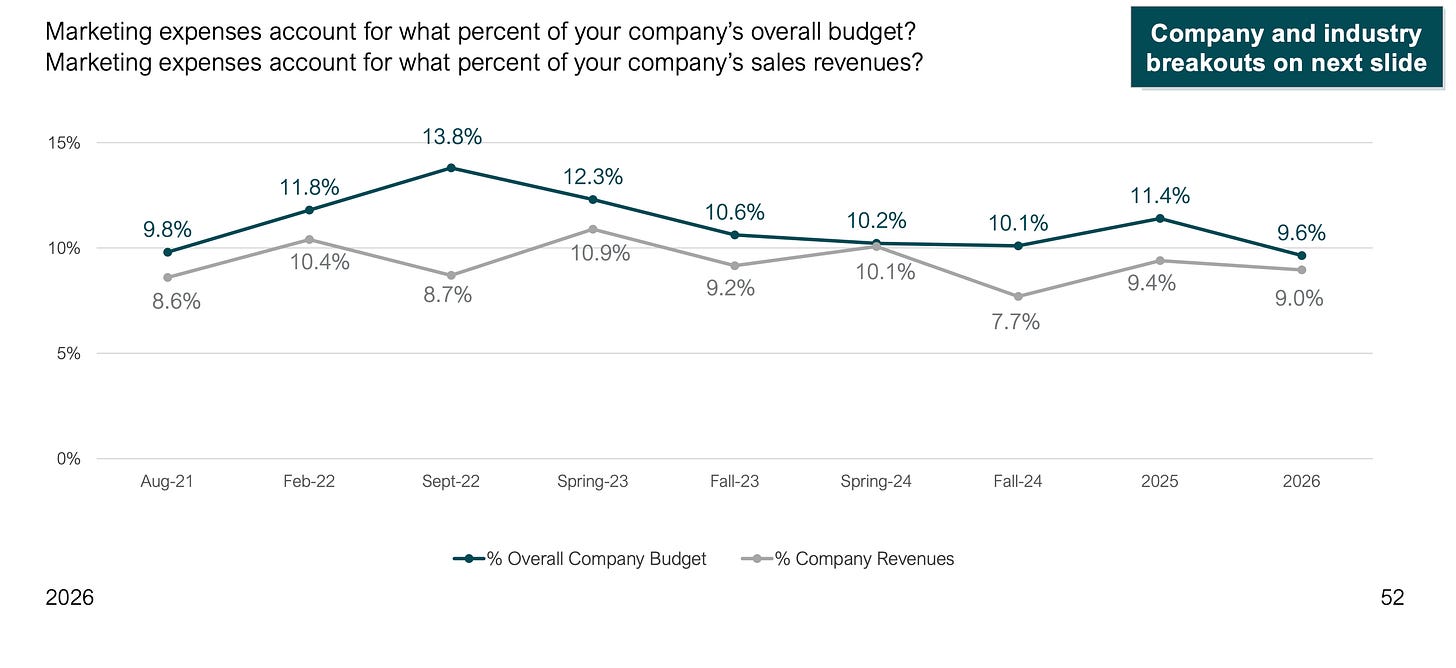
Where growth money goes
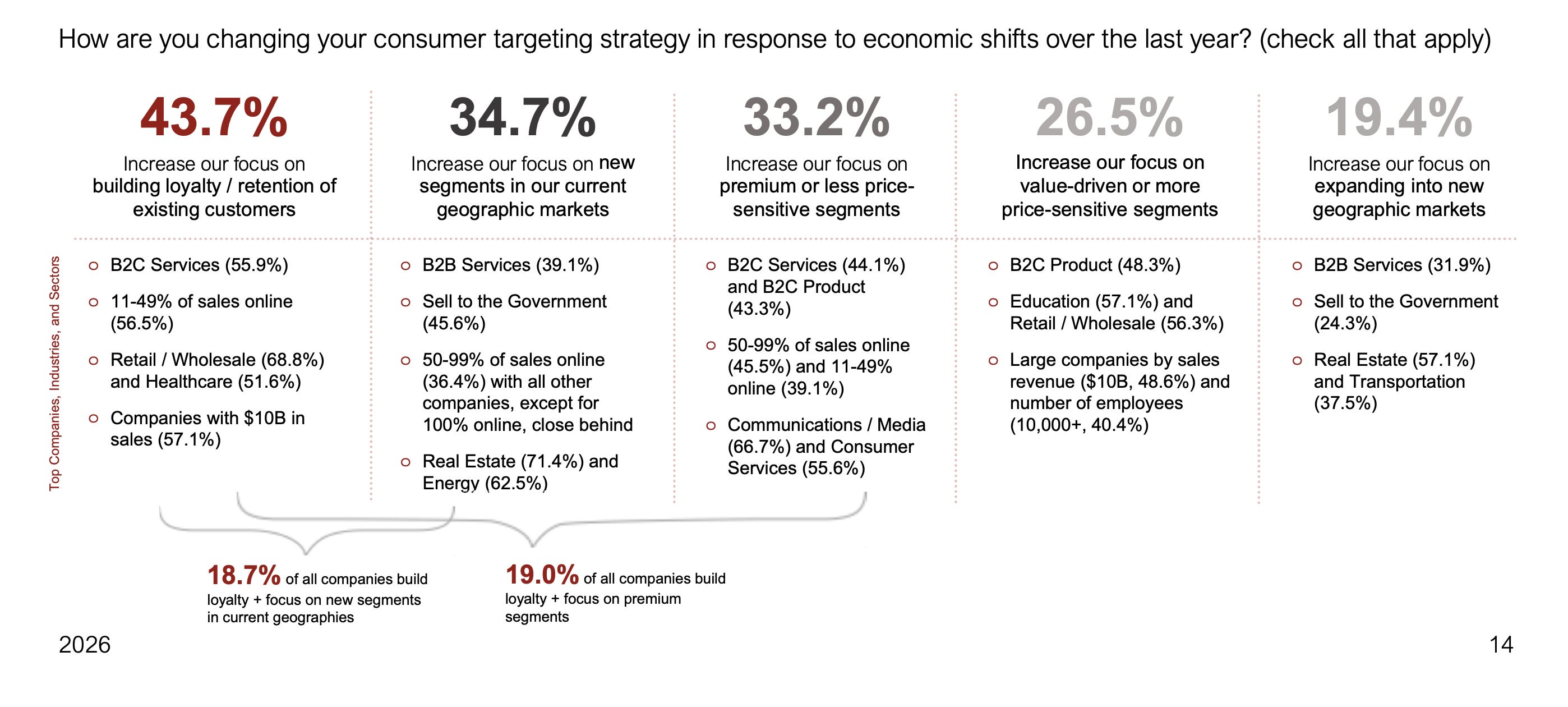
56.44% of growth spending goes to existing products in existing markets, 22.89% to new products in existing markets, 14.14% to existing products in new markets, and only 6.53% to new products in new markets. That looks timid until you remember they have an installed base to defend. You don’t have one yet — which is freedom, but not superiority.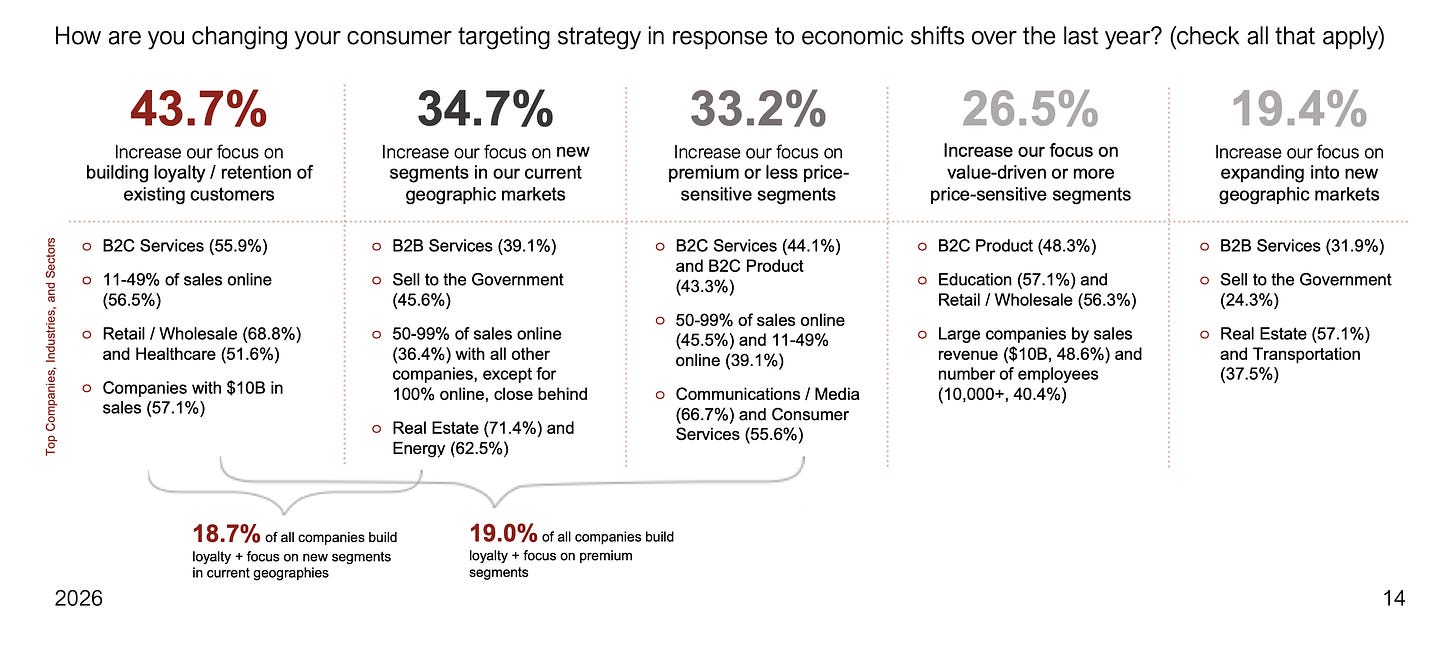
The one thing they have that you don’t
Asked how long marketing’s influence on a customer lasts, 24.4% said several months, 21.8% said a year, 18.6% said two years, 9.0% said five, and 4.5% said ten or more. Add up everything from a year upward and it is 53.9% — over half the room planning on a horizon most small companies never use.
That isn’t corporate slowness. It’s what you can do when you’re certain you’ll still be here.
The equivalent move for a small company is choosing one asset — a newsletter, a dataset, a founder profile on X — and refusing to judge it on a 30-day window.
It’s the one habit on this list worth copying upward.
Thank you for reading!
Stacy’s Brain reads marketing research so you don’t have to, grades every source for methodology, sample and vendor interest, and tells you how to use each number.