

Influencer marketing in 2026
If you ask about the reasoning behind influencer marketing, most LLM answers will revolve around the “friend” effect, high trust, content authenticity, improved brand awareness, and higher conversion rates compared to classic media buying.
All of this is relevant, but for 2024 — not 2026 — and as someone who actually runs an agency focused on influencer marketing, I probably shouldn’t tell you this (but I will, because I advocate for evidence-based marketing).
Here’s what we know about creator marketing in 2026:
82.7% of U.S. marketers use influencers in their creative marketing campaigns (source).
Only 5% of U.S. consumers completely trust influencer advertising, 74% — trust to at least some extent, while 26% do not trust it at all (source).
Still, 58% of consumers have made a purchase because of an influencer endorsement and 33% actively seek out influencer content to learn about products or topics (source).
Influencer ROIs spread much wider than linear TV’s, with far fewer campaigns landing anywhere near the channel average (source).
24% of marketers say they are very confident in proving influencer ROI to the C-suite, 62% are somewhat confident, and 14% are not confident at all (source).
30% of marketers say wrong influencer selection is the main reason campaigns fail, but only 6% blame targeting and 3% blame lack of consumer research (source).
A few more, because the picture only gets stranger the longer you look at it:
A net 61% of marketers plan to increase their creator investment in 2026, while only 27% of creator content ties strongly to the brand paying for it (source).
97% of marketers describe influencer targeting as inconsistent, immature, or essentially guessing (source).
In the UK, influencer campaigns return a short-term ROI index of 99 — within a point of the average across all channels — while the long-term index is 151 (source).
And my favorite:
Campaign spend share, campaign length and CPM have almost no relationship with influencer ROI, suggesting that creative fit and content matter more (source).
Mixed signal, right?
A channel that most of the market uses, that most consumers don’t fully trust but buy from anyway, and where the average campaign returns exactly what an average campaign returns in any other channel.
In fact, the efficiency of KOL marketing often depends on factors that are overlooked: tribe identification, social listening, consumer research, briefing, horizontal creator interaction, and even optimizing influencer content for LLMs and the attribution window.
So, let’s explore what the research says about the above.
Part 1: What we do wrong about influencer marketing
I won’t cover the obvious stuff — onboarding creators with fake metrics, or pushing everyone to use the same advertising copy. I hope that by 2026 these things are a given, and that the real barrier to efficient campaigns is far more complex.
There’s an insightful report on influencer marketing performance from Influencer Strategist, which surveyed 41 senior practitioners, 63% of them agencies and consultants — so people who actually sell creator marketing services.
Here’s what they consider to be the single most common reason influencer campaigns underperform:
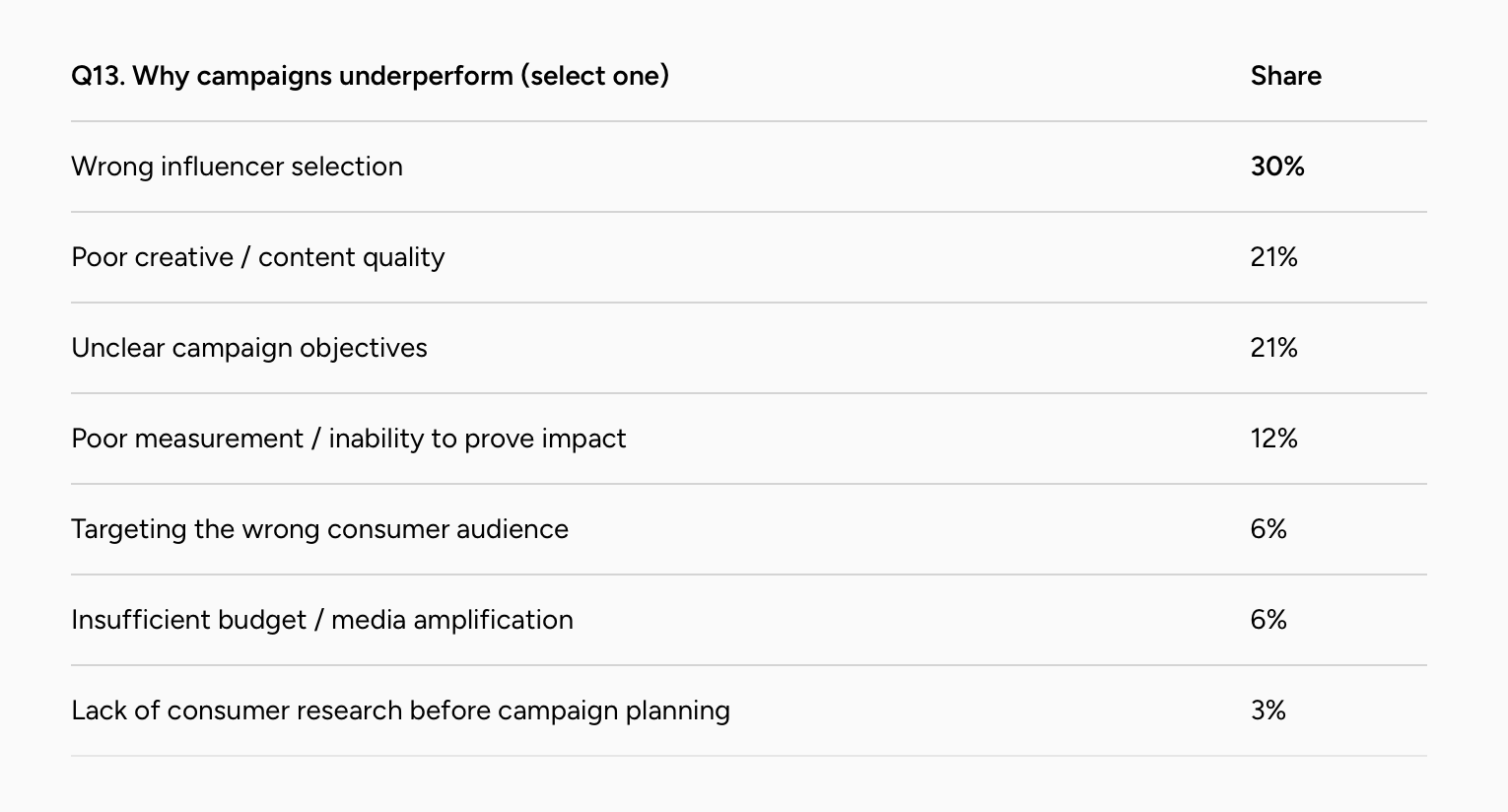
The “wrong influencer” problem
In fact, wrong influencer selection is not a root cause; it’s an outcome.
If you haven’t mapped the target audience the influencer needs to reach, if you don’t know what that community discusses, values, and trusts, and if you don’t know what will convince them pay attention to your product — then influencer selection becomes a guess based on engagement rates and audience demographics.
Some teams are lucky to guess, but at least 1/3 are not. And when they are not, they say “wrong influencer” instead of “wrong targeting”, “wrong messaging”, or “wrong strategy”.
Influencer Strategists share some great supporting stats:
50% allocate nothing to consumer research before campaign execution.
Only 20% use social listening data on what their target consumers actually discuss.
Only 30% have tribe identification tech in their stack.
94% use engagement rate for shortlisting creators while only 25% use data on what consumers actually talk about.
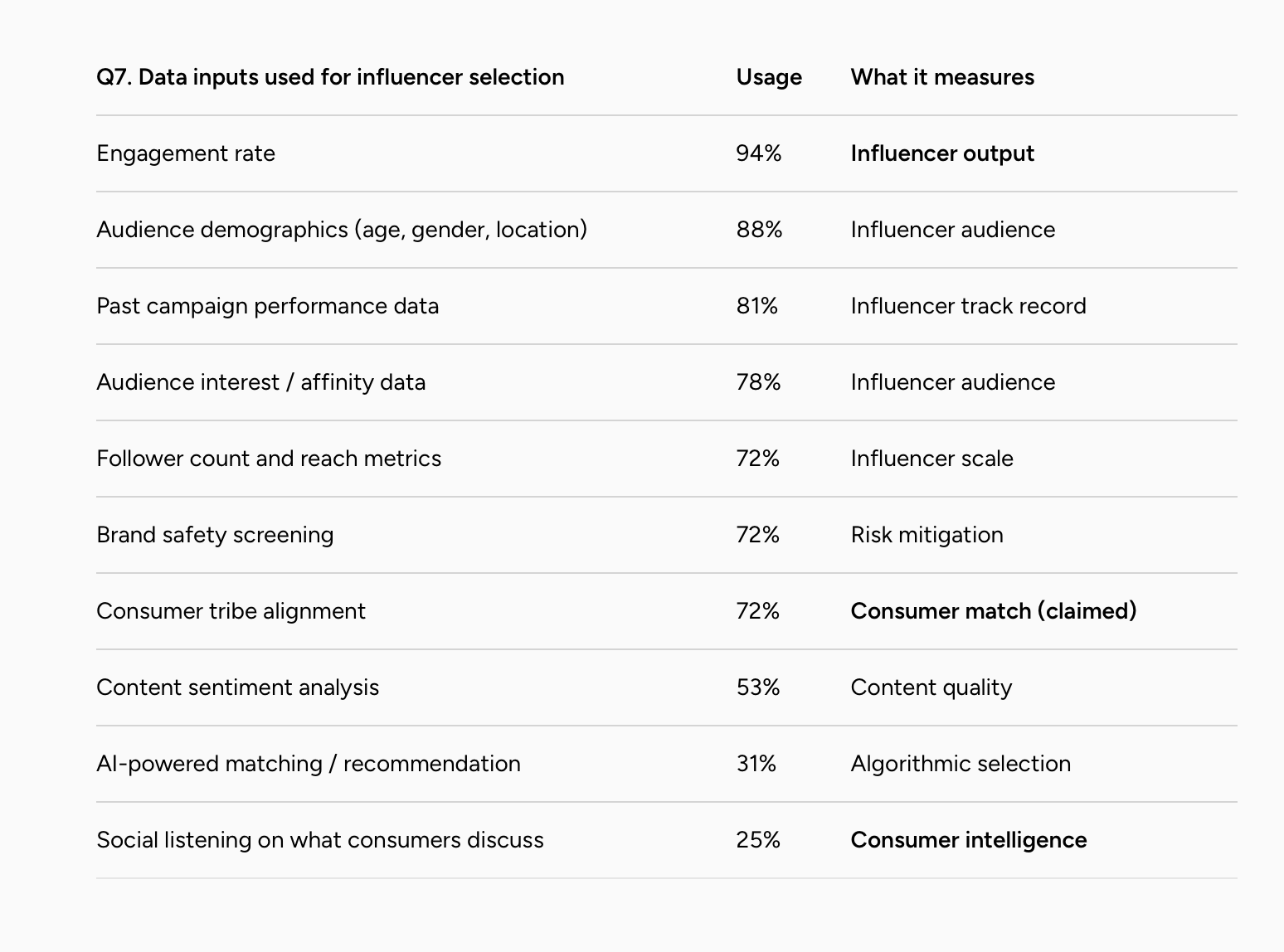
Number two — poor creative or content quality — is also, in many ways, a symptom. The root cause may sit earlier in the workflow — creator shortlisting, briefing, or content review. In fact, only 40% evaluate content for resonance with the target consumer tribe during review.
It’s worth highlighting that the data I’m quoting comes from senior-level practitioners. For market averages, I’d expect even lower numbers — especially for teams running influencer marketing in-house and treating it as “we pay influencers, they post”.
That turns influencers into CPM-style media buying, and creator marketing loses on CPM by a huge margin.
The approach should be different: a longer preparation phase and deeper pre-campaign analysis.
Part 2: What top teams do to boost creator ROI
1. Tribe identification
Tribe identification means finding tight-knit groups of online communities (tribes) that share the exact same hobbies, values, or passions. It’s a much deeper level of segmentation than targeting by age, geo, or content focus.
Let’s say you’re building a service for creative writing that shows X’s social trends in your niche. With classic targeting, you might market to broad marketing or business communities.
With tribes, you’d instead target “ProductHunt solo founders” as one category, “marketing degree students graduating this year” as another, and “emerging blogger communities who struggle to reach 1,000 followers” as group number 3.
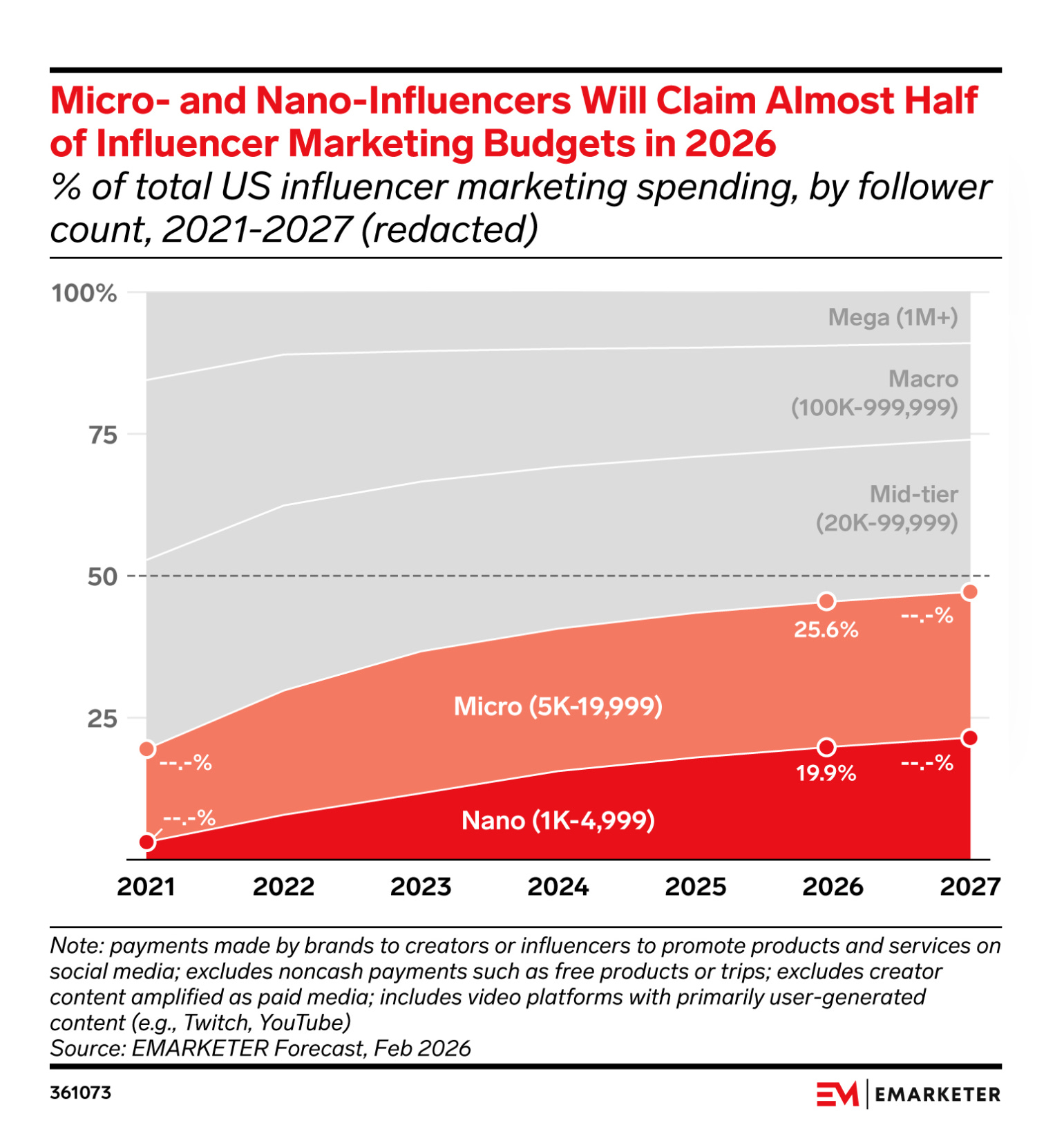
All of these are highly specific, allowing for more precise targeting and messaging — no wonder the interest in collaborations with micro- and nano-influencers is consistently growing (source).
In fact, just over half of marketers say they have detailed, research-backed consumer tribe profiles. A third have only a general understanding, and 11% rely solely on audience data or tags.
Of those claiming detailed, research-backed profiles, fewer than half actually invest in research tools or use them for campaign decisions. So the real share of teams working from researched profiles sits closer to a quarter (source).
How do you identify tribes?
Two options.
First: tools. This is the easiest path to follow — especially if you can afford to allocate additional budget to influencer marketing intelligence.
Some tools on my shortlist (in no specific order; do your own research, as they’re not universal across niches):
HypeAuditor (more generalized)
Tubular (video content intel)
Second: vibecoding + AI + in-house resources (slower, but better tailored)
If you choose this path, you’ll need to define the target user personas, map their keyword cloud, and set up social listening to identify relevant communities.
Some platforms already do this under the hood — X, for example. Their latest Radar lets you build a discovery terminal using specific keywords and filters, and it can serve as a solid first layer for creator discovery.
2. Social listening
In simple words, social listening is the strategic process of tracking, aggregating, and analyzing online conversations and sentiment across the internet to understand why people talk about a brand or industry, rather than just tallying direct mentions.
While basic monitoring tells you what is being said, social listening uncovers the underlying emotions, contextual shifts, and broader trends driving those conversations.
So, in fact, social listening supports a wider range of goals beyond shortlisting creators:
Briefing: Source current pain points, trending topics, and messaging pillars from what users are actually saying.
Campaign design: i.e. engage creators with polar opinions on a specific topic together to boost engagement.
Optimisation: Detect early warning signs of dissatisfaction or concerns before a major issue escalates.
Post-campaign analytics: Collect authentic, unprompted customer feedback to guide future feature rollouts or changes.
How popular is this tactic among top practitioners?
In fact, only 24% of marketers always run social listening before briefing influencers. The largest single group, 33%, runs it only sometimes, if time and budget allow (source).
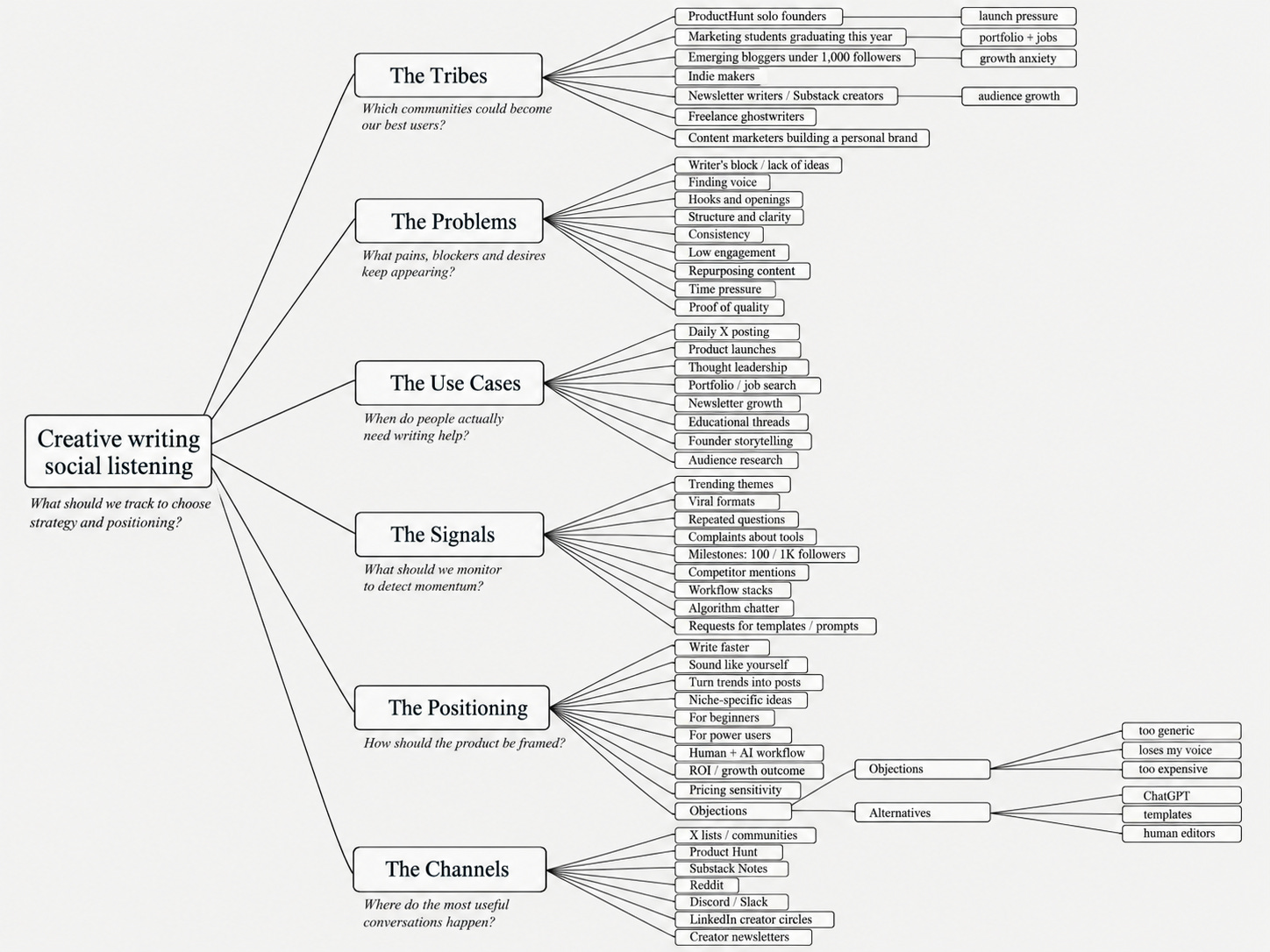
Here’s an example taxonomy for a creator campaign, based on the case we discussed earlier — where we build a service for creative writing.
How do we do social listening?
Same as with tribes, there are two options — depending on your actual budgets and capacities.
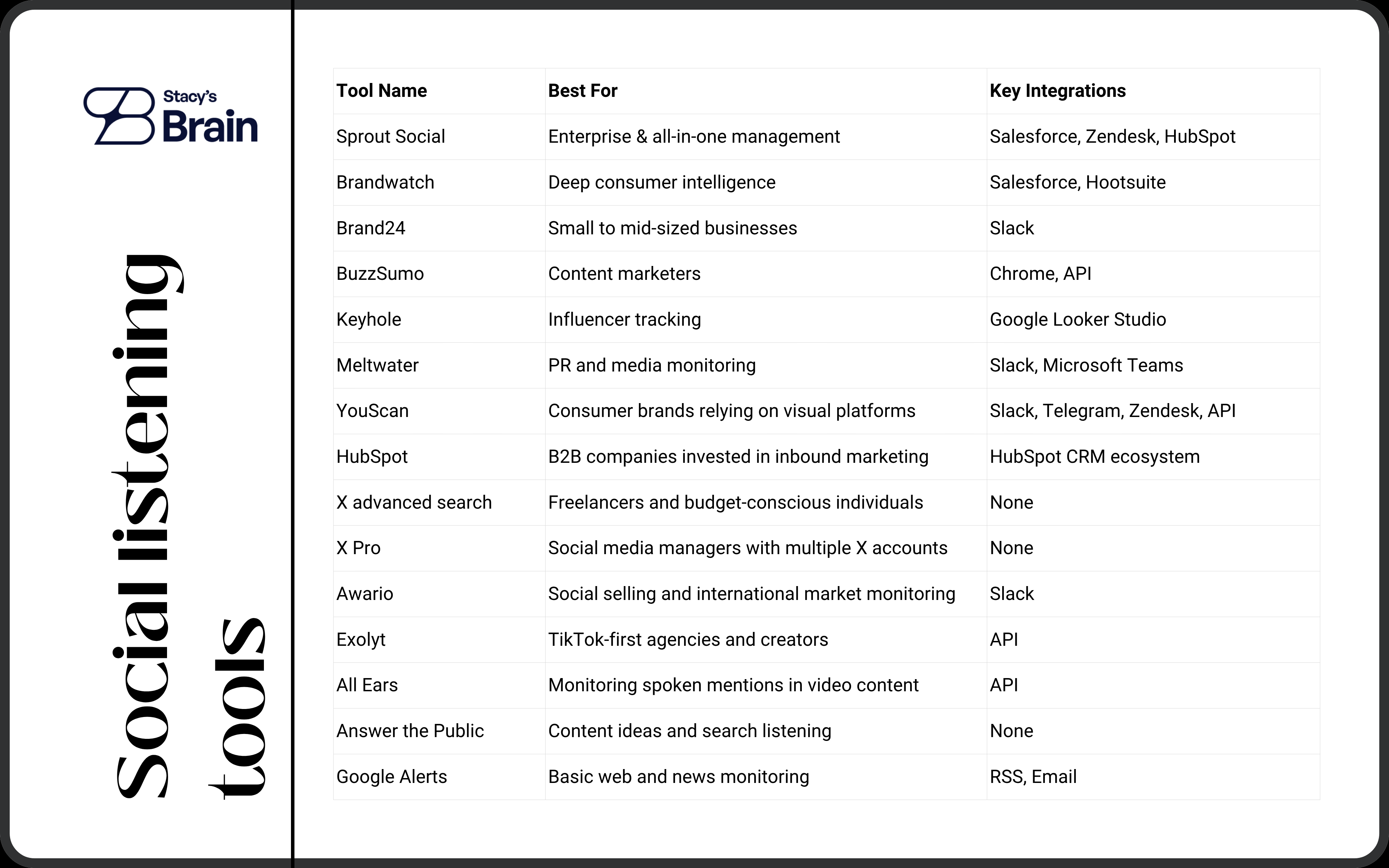
Below is a list of tools mentioned by SproutSocial (one of the leaders in social listening). I’ll leave it here for your homework research.
3. Briefing and keyword strategy
How do most teams do creator briefs in 2026? If your answer is ChatGPT, you’re probably closest to the sad reality — that’s what we see when working with brands on their campaigns.
In the best possible case, the brief includes key messages, brand guidelines, DO’s and DONT’s, and (if the team is creative) a few potential content ideas.
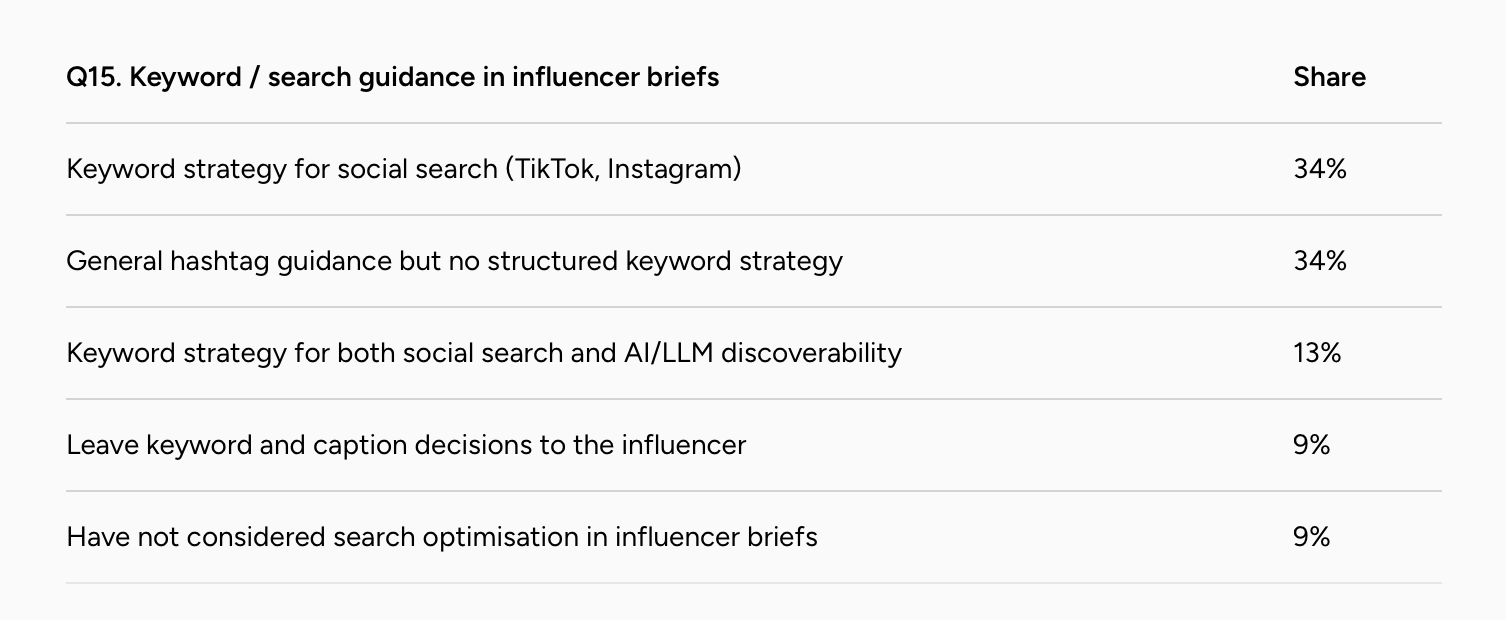
Now, guess the single missing piece that only 13% of pro teams include: a structured keyword strategy covering both social search and AI discoverability (source).
This is important due to two reasons:
Users increasingly treat TikTok, Instagram, and YouTube as search engines
LLMs and AI search tools like ChatGPT and Perplexity also start relying on social data as user consensus
This aligns with an ROI trend highlighted by IPA: influencer campaigns deliver a short-term ROI index of 99 — within one point of the cross-channel average — while the long-term index rises to 151 (source).
My interpretation: influencer content drives two waves of attention — a loyal community (short-term) and an intent-driven community (long-term). Because intent-driven audiences typically convert at a higher rate, they can boost ROI over longer measurement windows.
Here’s a quick illustration of what I mean by keyword strategy, using an example of content centered on competitive brand comparison: [Brand A] vs [Brand B], alternatives to [Competitor], best for [Use case].
More things that increase the efficiency of KOL campaigns at the briefing stage
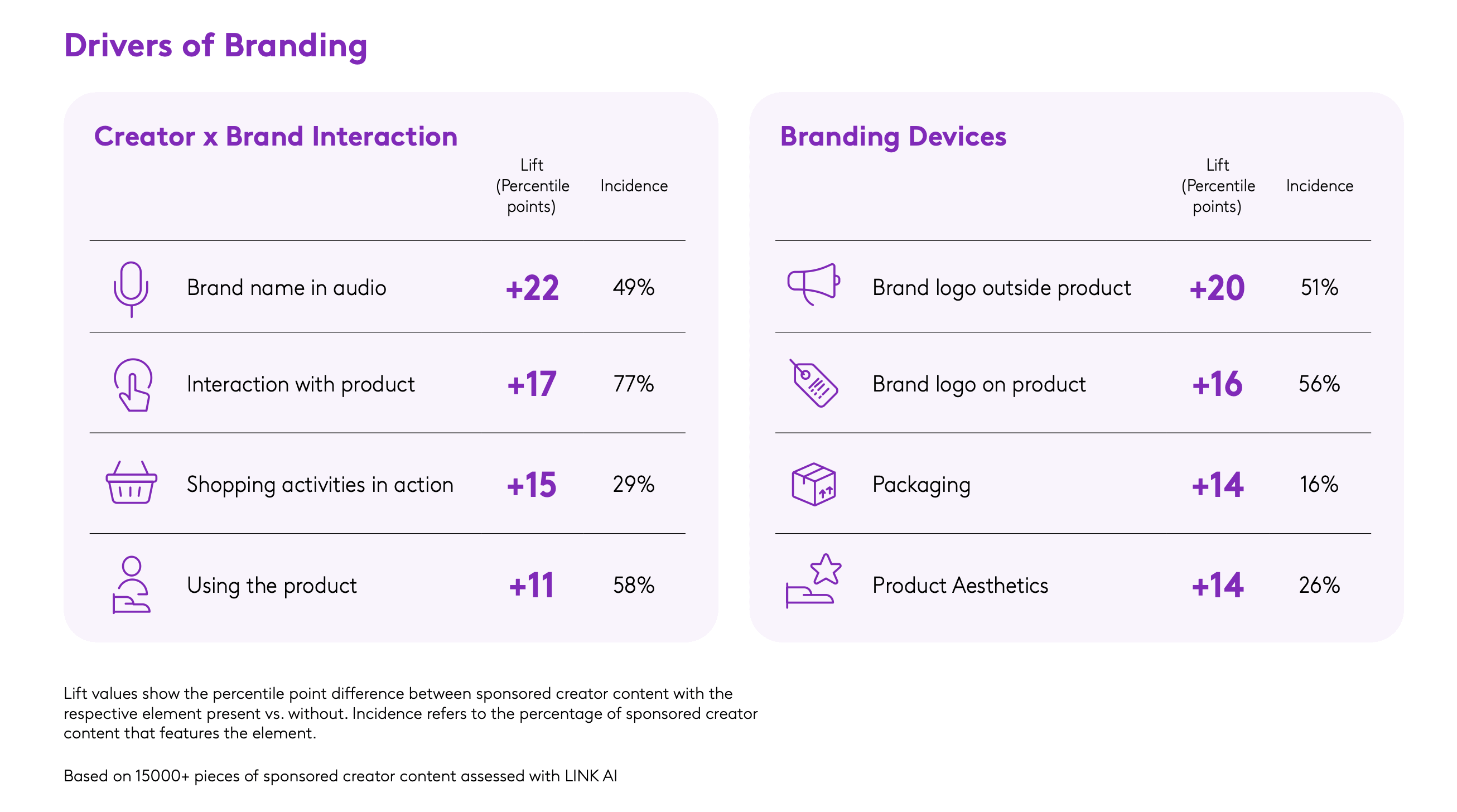
For this part, I selected a report from Kantar, who analysed more than 15,000 pieces of sponsored creator content across TikTok, Instagram, and YouTube.
Saying the brand name aloud lifts branding by an average of 22 points.
Showing the creator handling the product is both the most common lever in sponsored videos and the strongest single one for brand lift, at +15 percentile points.
A logo placed away from the product lifts branding more than one placed on it — +20 against +16 percentile points.
Describing what the product does beats describing how good it is. Product benefits appear in 71% of creator videos and lift brand power by 18 points; quality claims lift 10.
And there’s another pre-registered experiment I have to mention in this context which ran on 210 young adults in Vietnam: young adults rated a negative influencer review as clearly more helpful than a positive one about the same product (source). The same study found that a single negative review moved neither brand image nor purchase intention — and neither did a single positive one.
So when you brief creators, let them speak plainly about drawbacks and disadvantages — it boosts trust and doesn’t really hurt purchase intention.
A few more recommendations from my practice at Green Dots:
Multi-level briefings optimized for discovery, interest, and acquisition help boost end-of-funnel conversion.
Hooks are one of the most overlooked parts of creator briefs. Most attention decisions are made in the first 1–2 seconds of interacting with content—so if a sponsored post can’t capture attention, the rest doesn’t matter. Delegating this entirely to creators (especially those with limited experience in efficient ad content) hurts efficiency.
Ideally, briefs should be tailored to each creator, their tribe, and the influencer’s role in the campaign to maximize the value of each placement.
4. Creator strategy and horizontal creator interaction
Most KOL campaigns are isolated: Creator A never engages with sponsored content from Creator B — which, in my opinion, is one of the biggest gaps in influencer marketing — because creators continuously engage with each other outside of campaigns.
This is more about campaign architecture, and it’s one of the strongest short-term efficiency levers in our practice.
Let me quickly illustrate:
Imagine Creator A only posts your brand name. Nothing else — no CTA, no referral link.
Then Creator B quotes Creator A and adds his own argument (e.g., “Stacy’s Brain — because evidence-based marketing works”).
Creator C does the same, but his argument is: “Because AI answers are not reliable.”
Creators D–N follow the same pattern.
Meanwhile, your brand (well, mine in this example) reposts each argument to your profile, then later creates a thread compiling all of them — which creators then retweet.
This is what we call creative creator marketing. And this is just a quick example off the top of my head as I’m writing this; real-world cases are far more complex (and more interesting).
Checklist for your next influencer campaign
Before anyone gets shortlisted
Write down the tribe. Age, geo and interest tags will not carry you here — name the community, what its members have in common, and where they already gather.
Collect what that tribe actually says: the complaints, the comparisons it makes, the phrases it repeats.
Run social listening before the brief is written. Only 24% of practitioners always do, and the ones who skip it are the ones who later report a “wrong influencer”.
Decide what would have to be true for this campaign to have worked, and write it down before any money moves.
Choosing creators
Start from overlap with the tribe you mapped. Engagement rate is a filter you apply afterwards to remove the obviously broken accounts.
Check who the creator’s audience actually is against your tribe profile.
Give every creator a job in the campaign — reach, credibility, demonstration, objection handling — and shortlist against that job.
Where the tribe is narrow, several small creators inside it will usually beat one large creator sitting next to it.
Campaign architecture
Decide how creators reference each other before the first post goes live. Isolated placements waste the thing creators already do with one another every day.
Assign each creator a distinct argument so the set covers the objection map instead of repeating one message nine times.
Plan what the brand account does with the output — reposts, quote replies, a thread that compiles the arguments — as part of the campaign, not as an afterthought.
The brief
Write a separate brief per creator, built around their tribe and their role.
Put a keyword strategy in it, covering both in-platform search and AI answers. 13% of professional teams do this today, which makes it close to free advantage.
Specify the hook. The first two seconds decide whether the rest is seen, and handing that to a creator who has never written an ad is how the budget leaks.
Ask for the brand name to be said out loud and for the product to be handled on camera. Also, keep the logo off the product itself.
Brief what the product does rather than how good it is.
Let creators name drawbacks in their own words.
Measurement
Set the attribution window before launch, and set a long one. Short-term ROI for influencer sits at an index of 99, within a point of the cross-channel average, while the long-term index is 151. A 30-day window measures the half where nothing distinguishes the channel.
Expect wide variance and judge the portfolio, not the placement. Influencer ROIs spread much further than linear TV’s, so one campaign tells you very little about the channel.
Review the content against the tribe, not only against the brief. Only 40% check for resonance with the target community at review stage.
Keep the comments. Unprompted feedback from a campaign is cheaper consumer research than anything you will commission.
Record the tribe, the brief and the creative levers next to the result. Without that, the next campaign starts from the same guess.
Influencer marketing is far more complex — and execution-dependent — than other forms of paid advertising. It’s no surprise, then, that brands are split almost evenly on which approach drives the most ROI: Ambassador programs at 24%; UGC in paid ads at 23%; One-off campaigns at 22% (source).
Keep learning, keep experimenting.
Yours,
Stacy